Travel Guides and Stories
Sep 23,2025

There’s a Penguin Island near Melbourne
38 Views
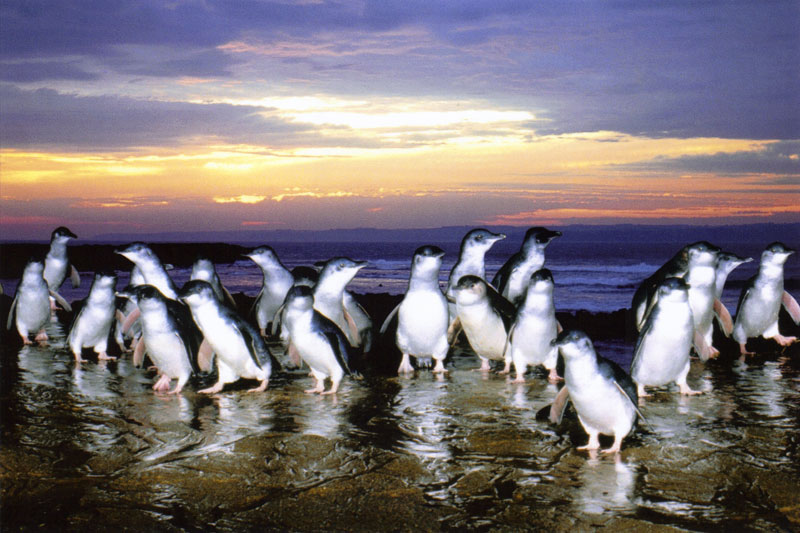
Quick note: all little penguin photos here were downloaded from the internet—the reason is explained below.
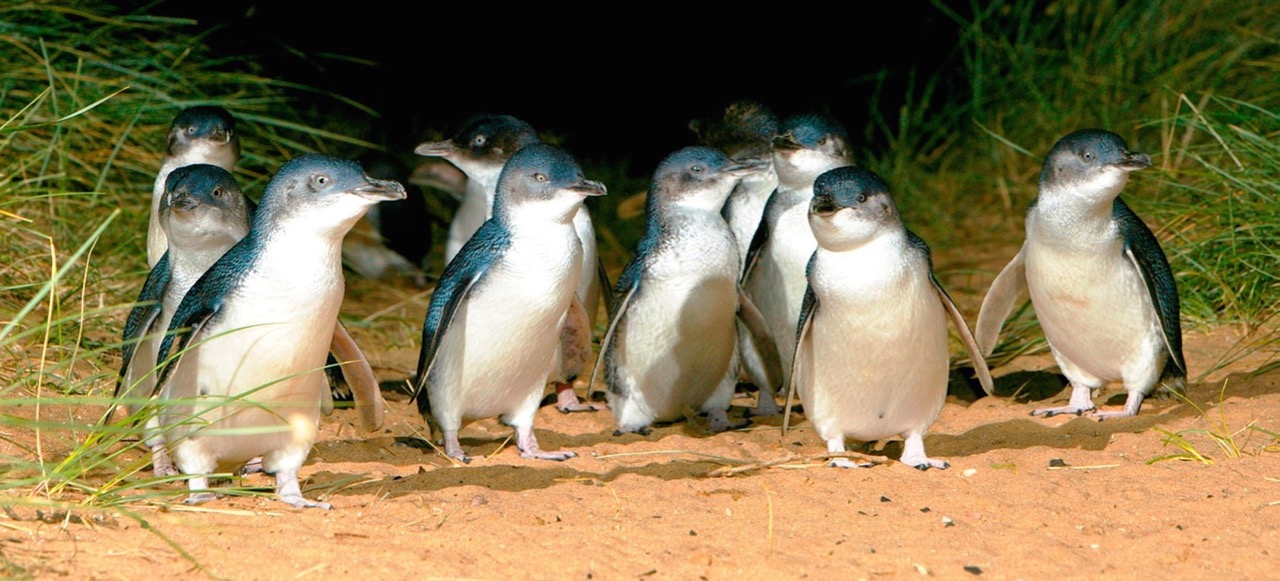
If you love animals, don’t these adorable little ones just zap you with cuteness? They do for me.
They’re called little penguins, the smallest in the penguin family at about 30 cm tall. Because their plumage looks blue, they’re also called little blue penguins; “fairy penguins” is another nickname.
Here’s the fun part: you don’t need to go to Antarctica to see them in the wild. Phillip Island near Melbourne is their habitat, which is why it’s nicknamed Penguin Island.
When I first went to Melbourne 20 years ago, penguin viewing was already a thing. Little penguins feed at sea during the day and return to their nests at sunset. Locals built tiered viewing stands on the beach at the colony and open them at dusk so visitors can watch the penguins’ homecoming parade.
This April, I traveled in Australia with three lovely gals and met up in Melbourne. On April 1, before everyone arrived, I decided to visit the penguins again and booked a local one-day tour on Taobao.
Penguin Island is a fair distance from the city—about a two-hour drive. Because the penguins come ashore after sunset, day tours add other stops along the way to round out the itinerary.
The first stop was Moonlit Sanctuary Wildlife Conservation Park, a privately run sanctuary said to be funded mostly by donations. It’s small—our guide joked you can’t get lost—and feels very natural with minimal human touch.
The visitor center sells kangaroo treats. If you’re holding a bag, the little roos will come right over
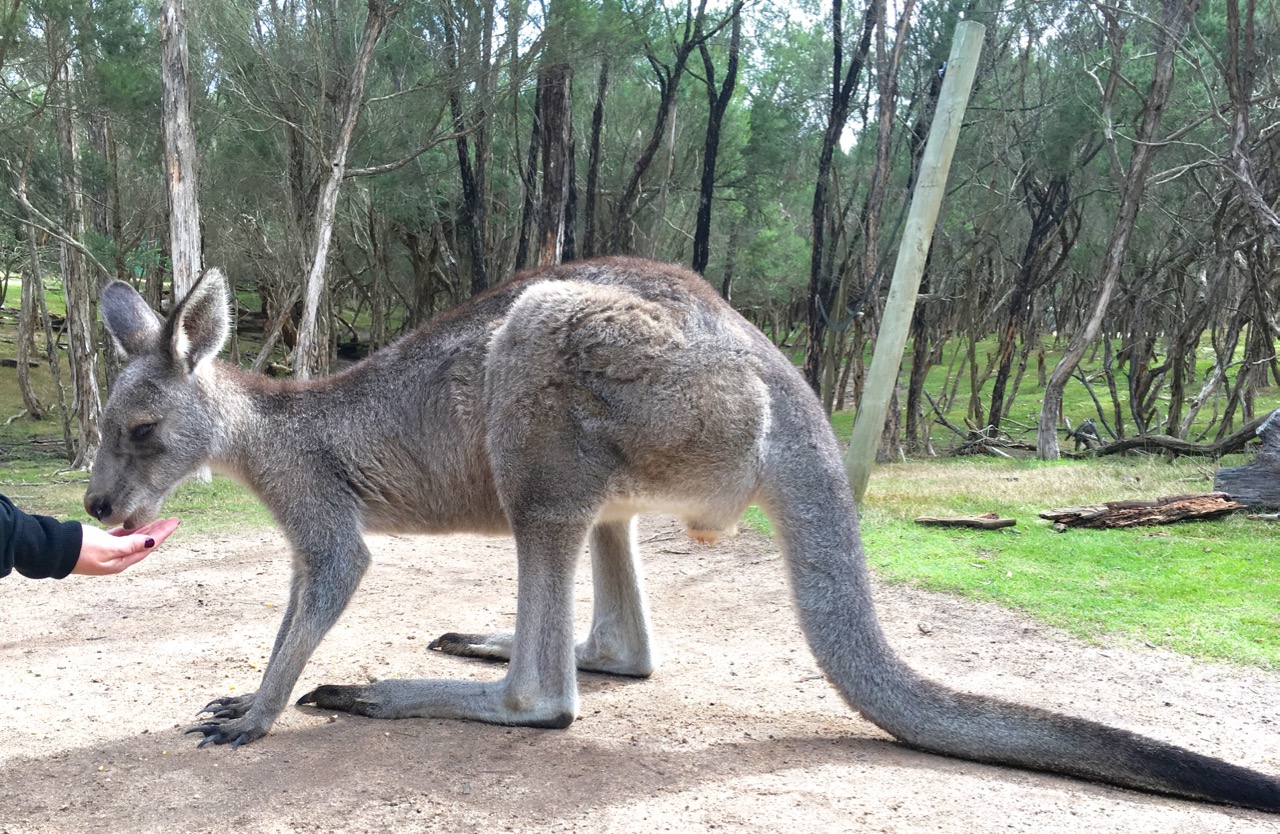
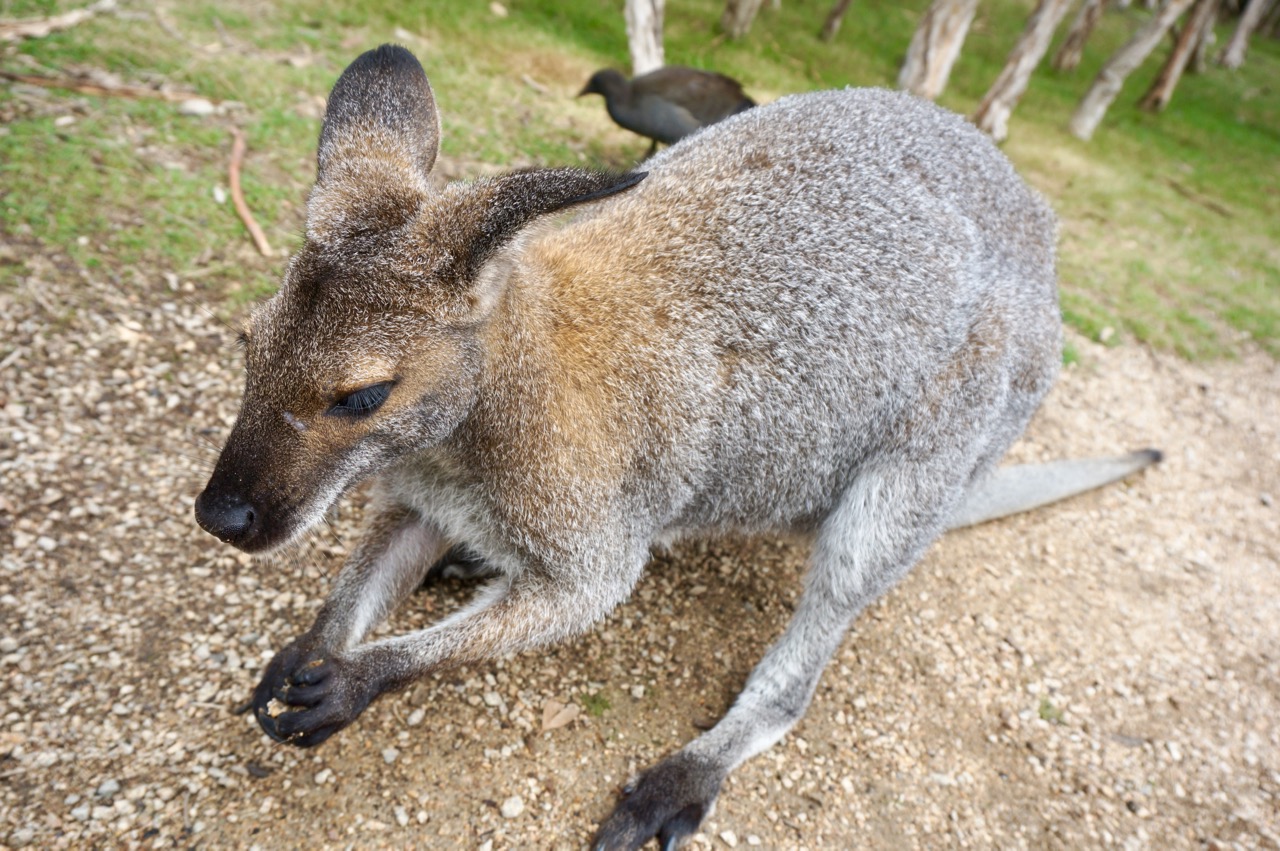
"Mmm, yummy!”
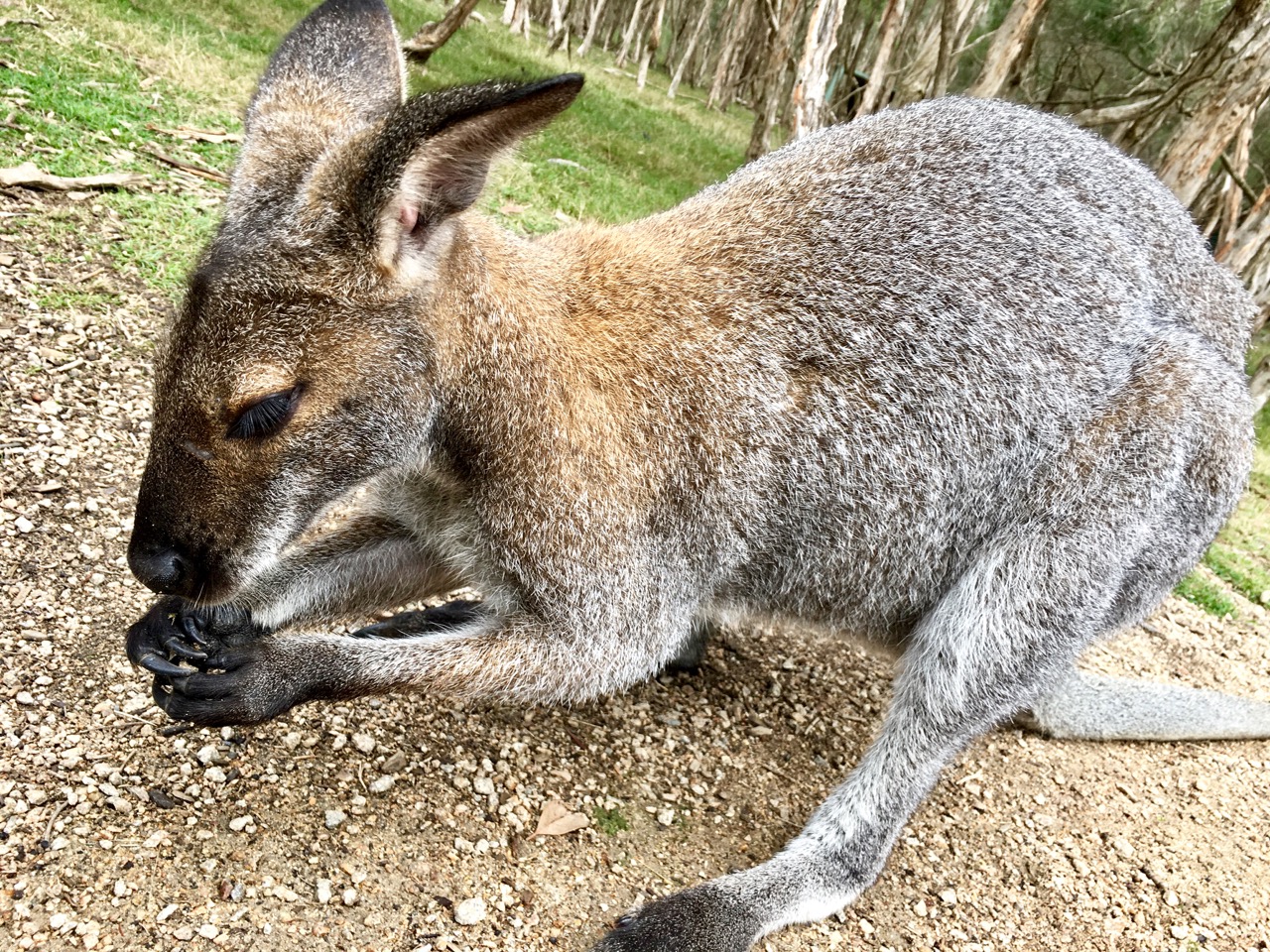
"Any more?”
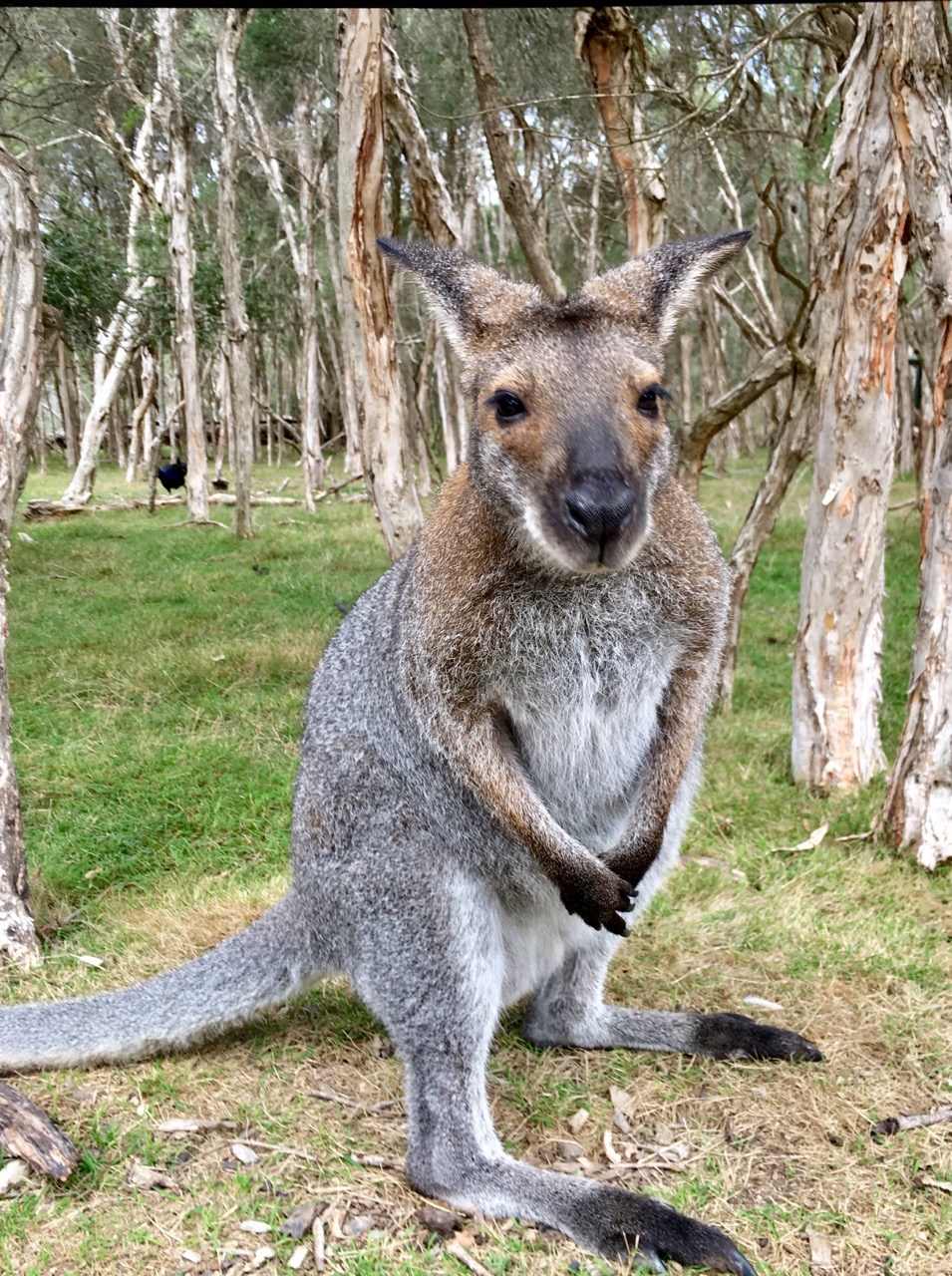
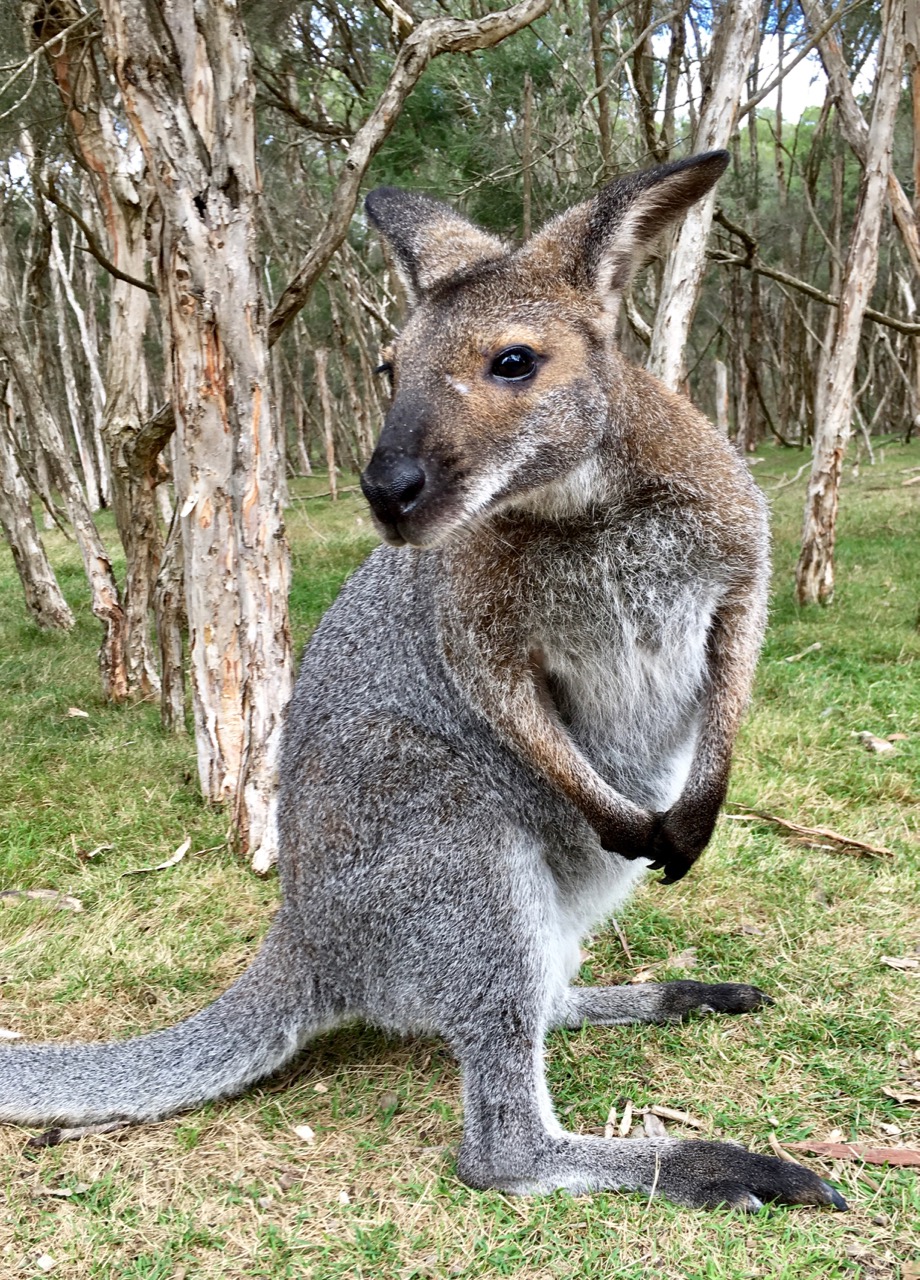
"This one’s out of snacks—time to bounce.”
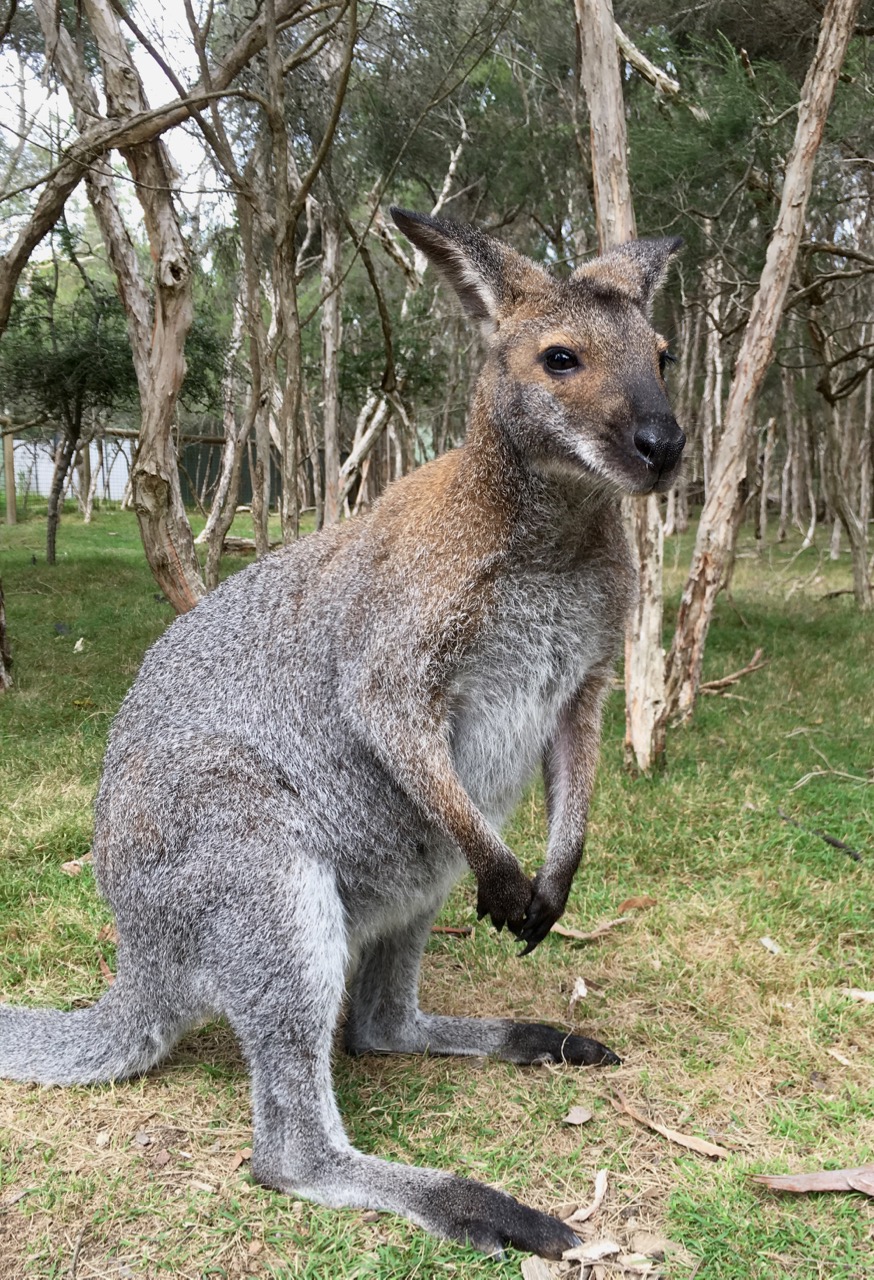
"Full and chilling—waiting for the next human with supplies."
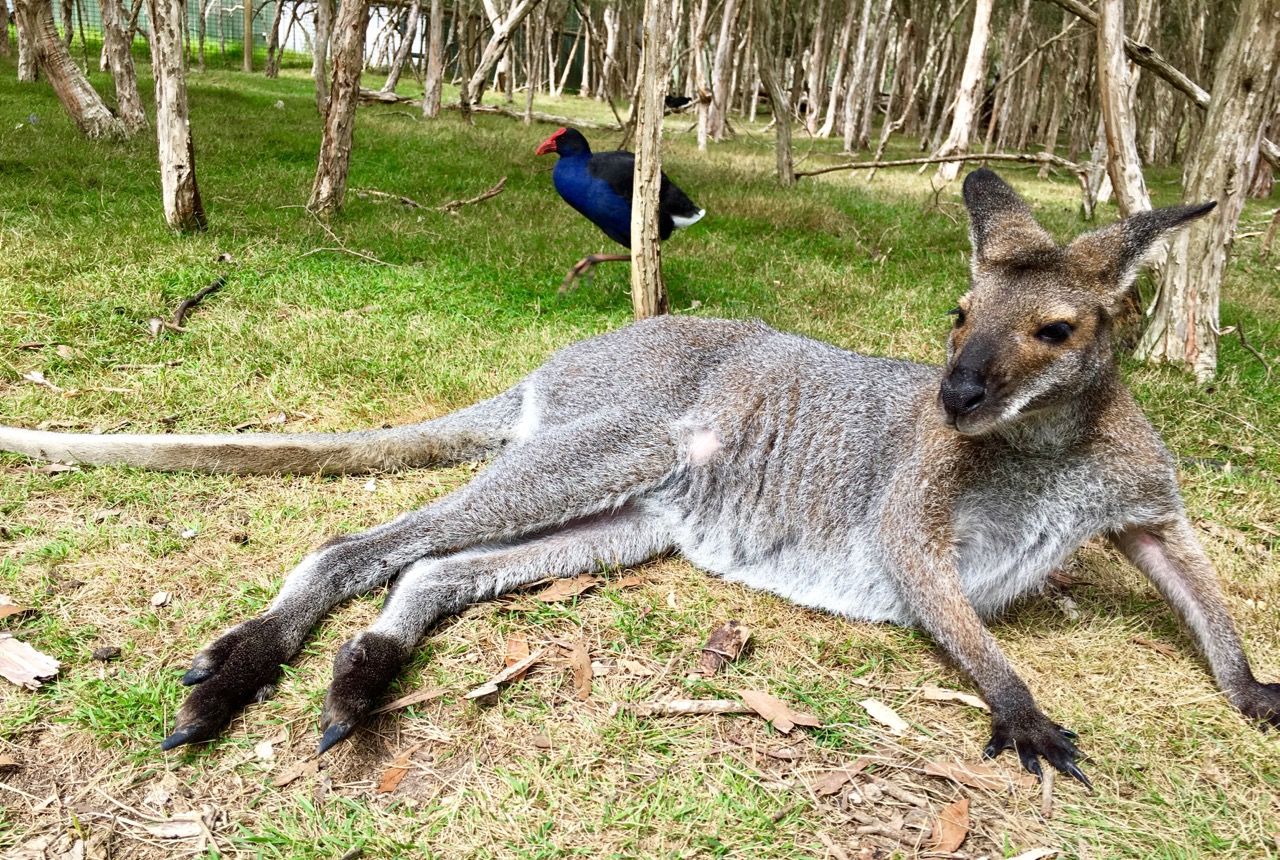
Good thing there’s something even cuter…
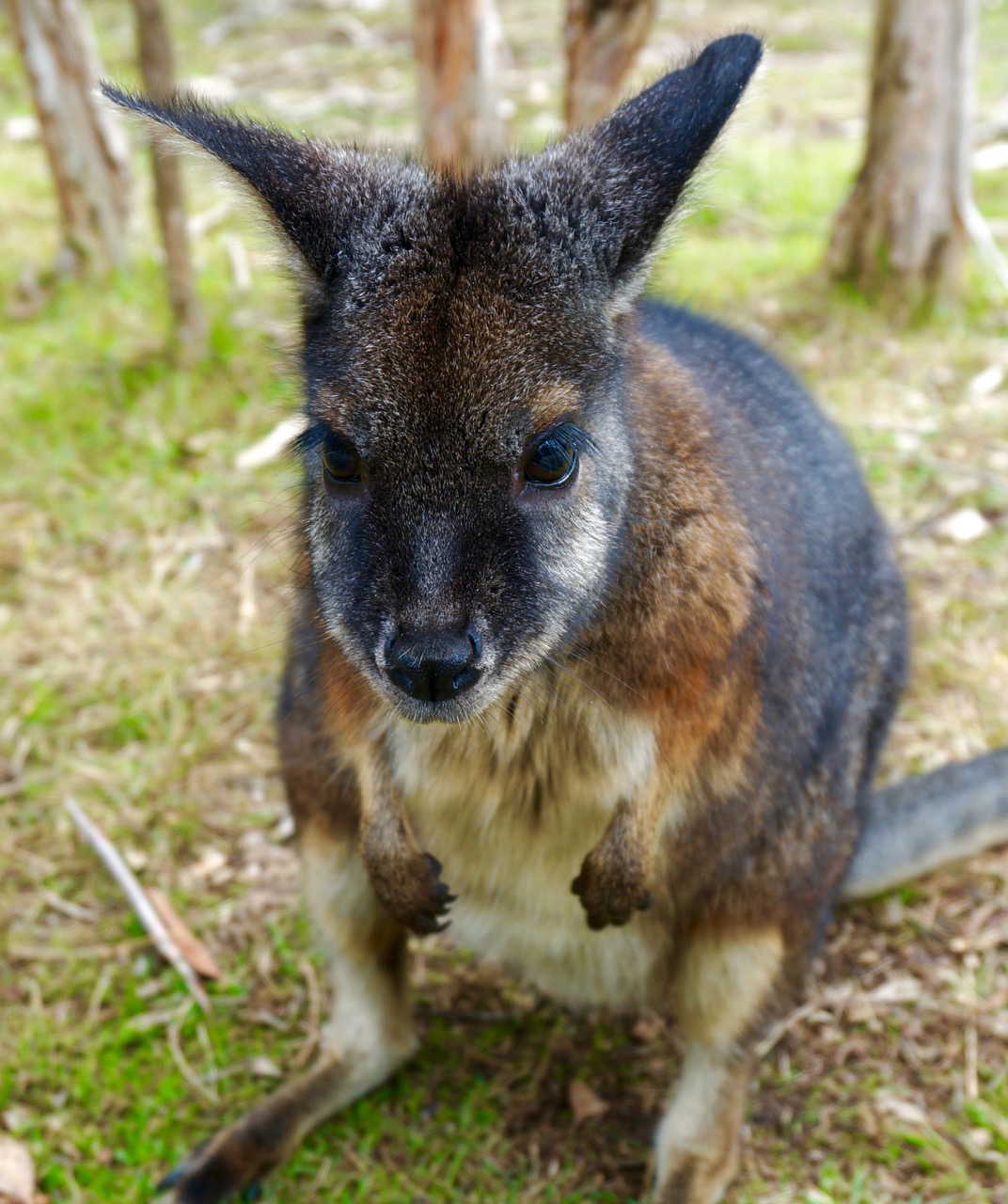
Teasing the little roos—so much fun
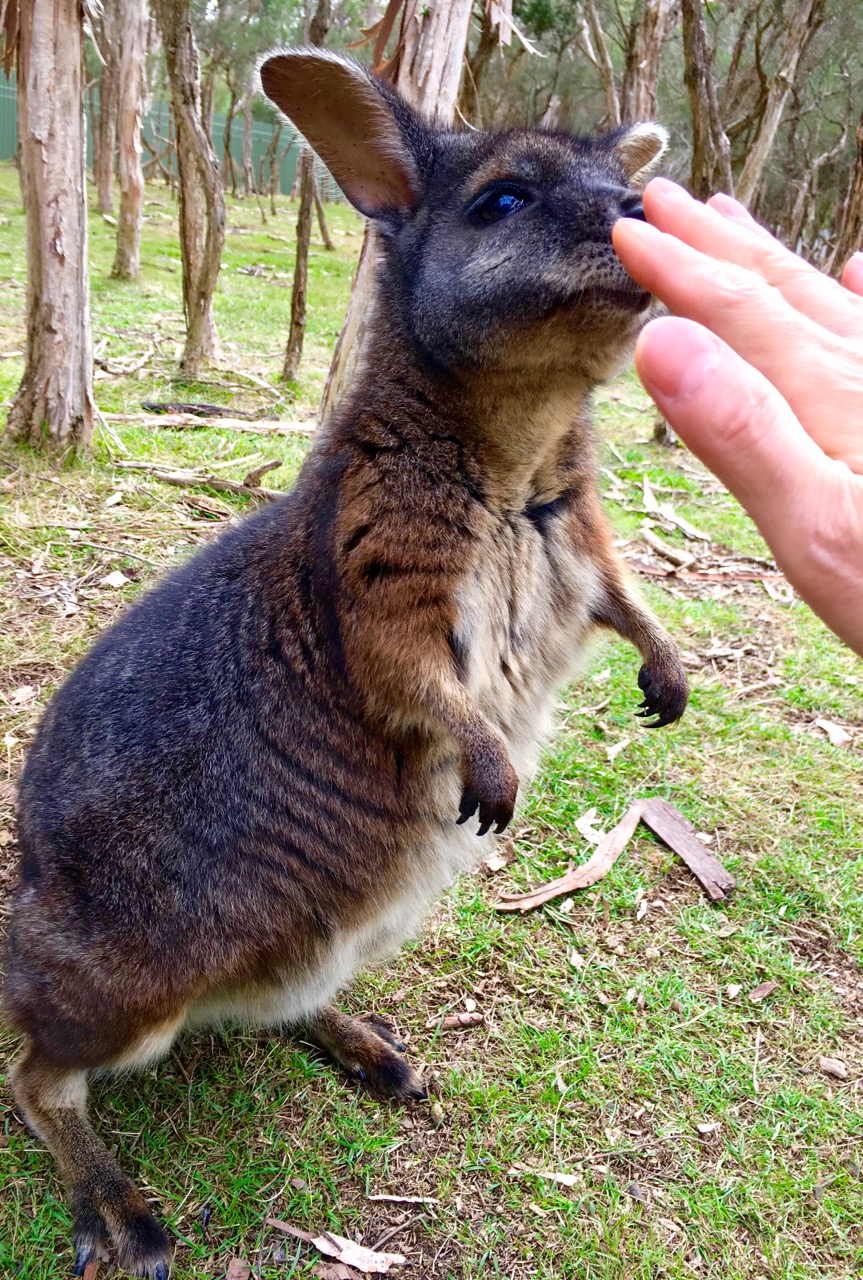
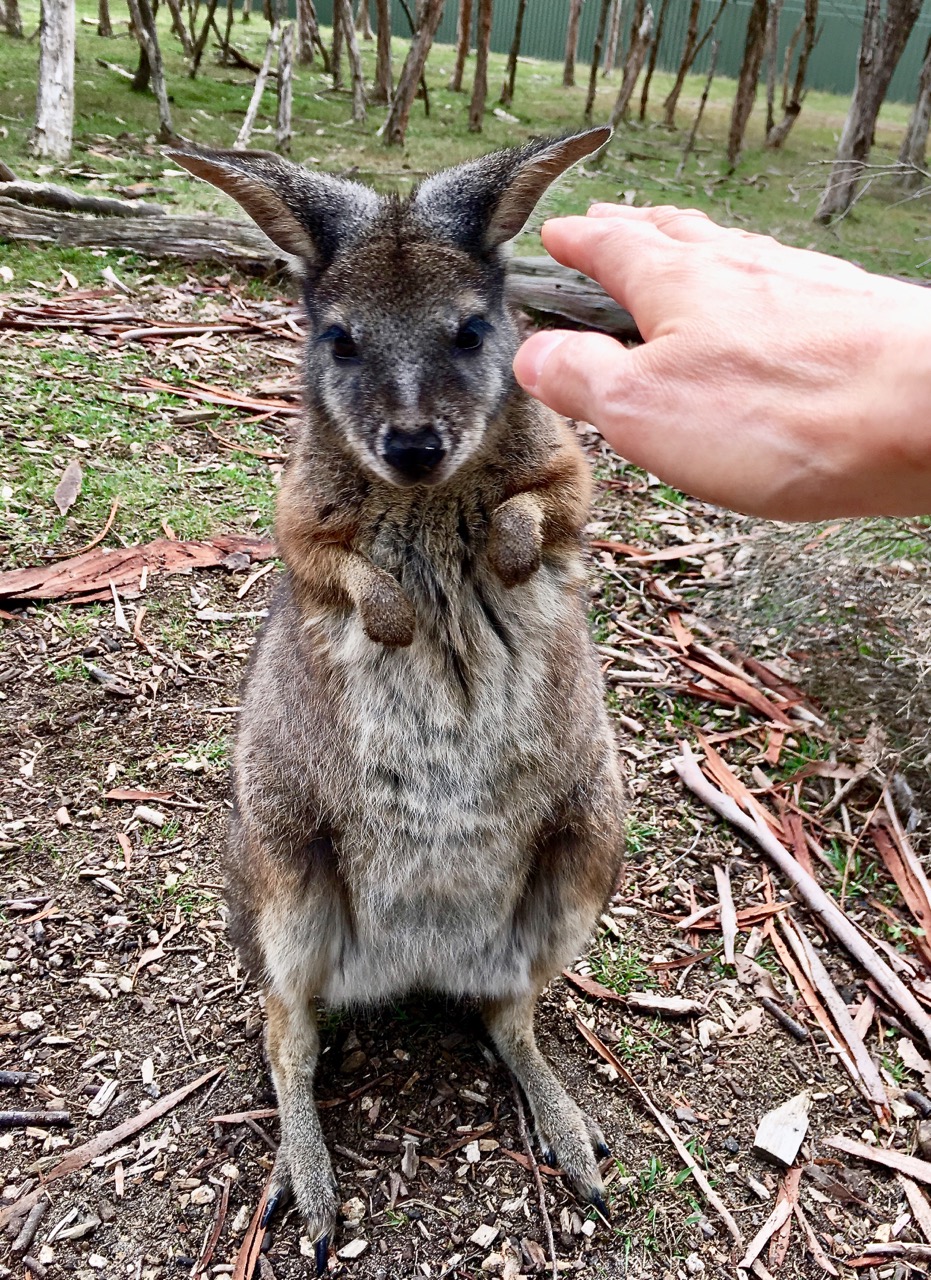
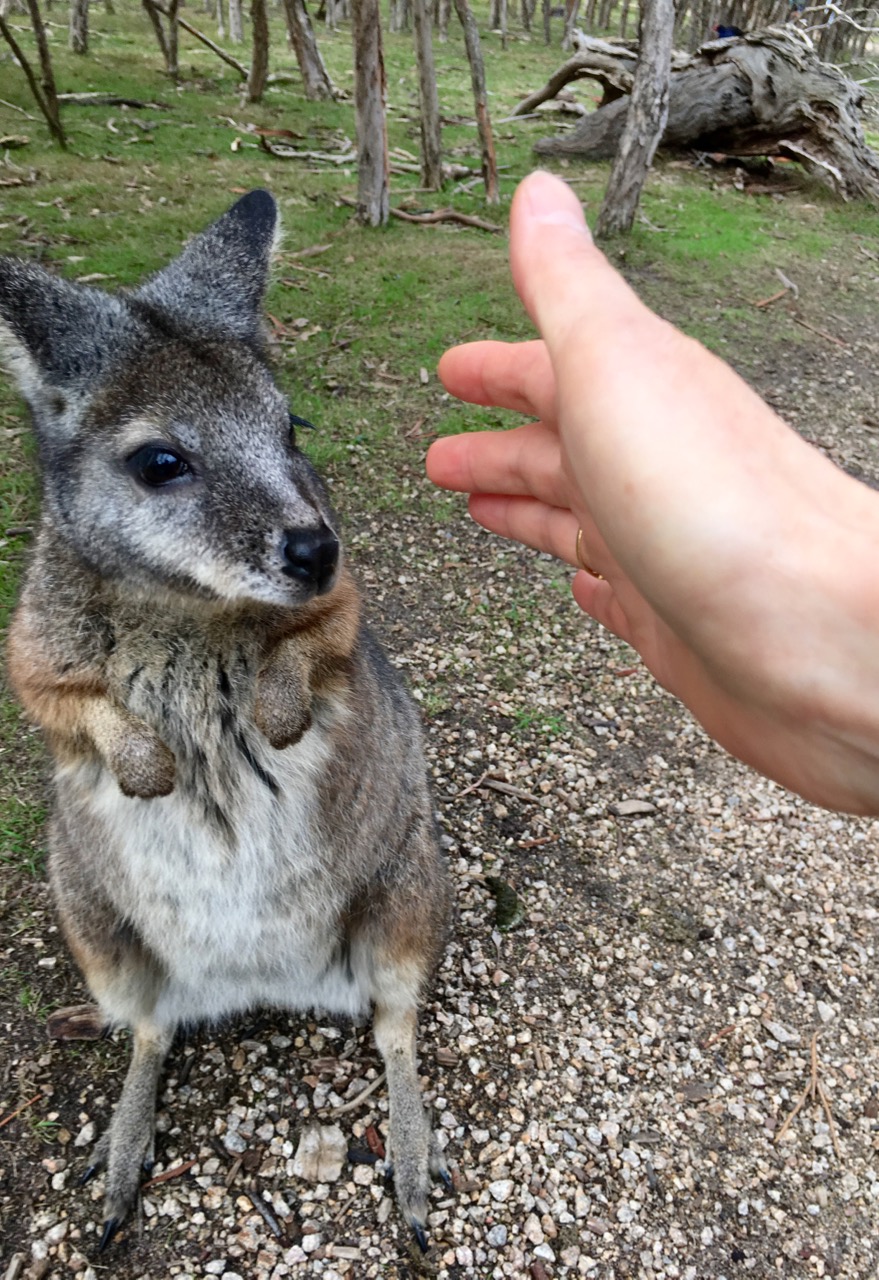
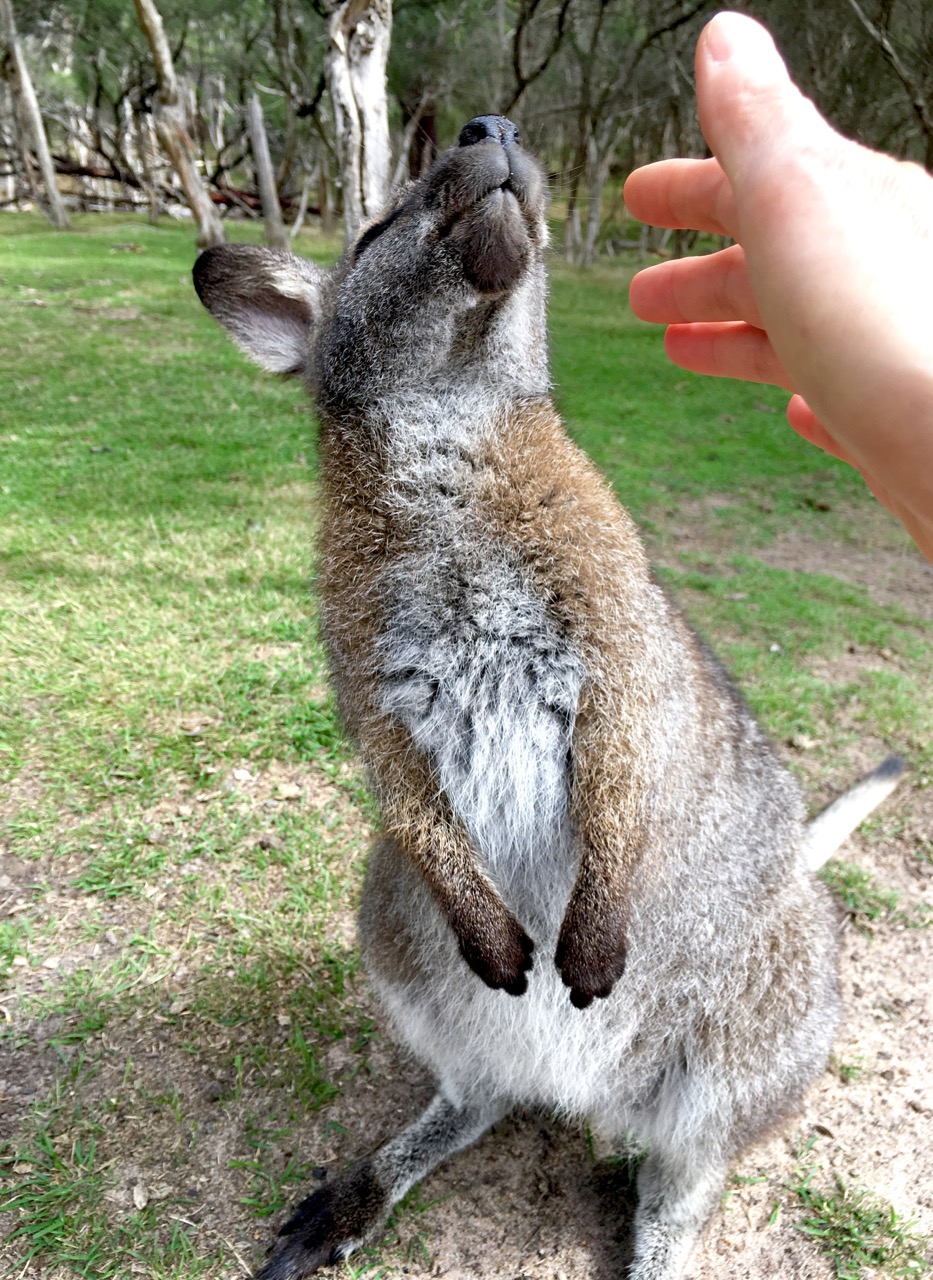
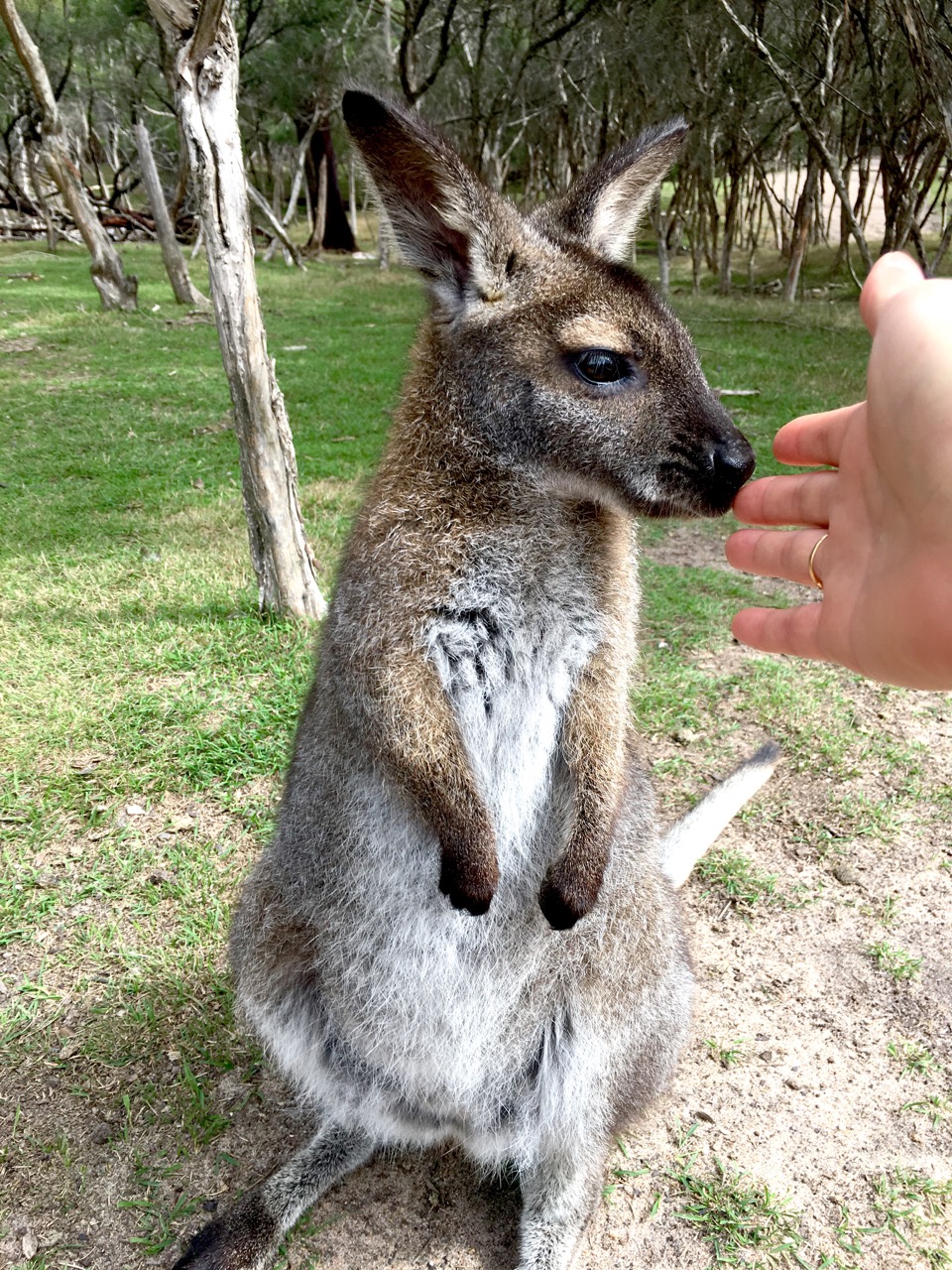
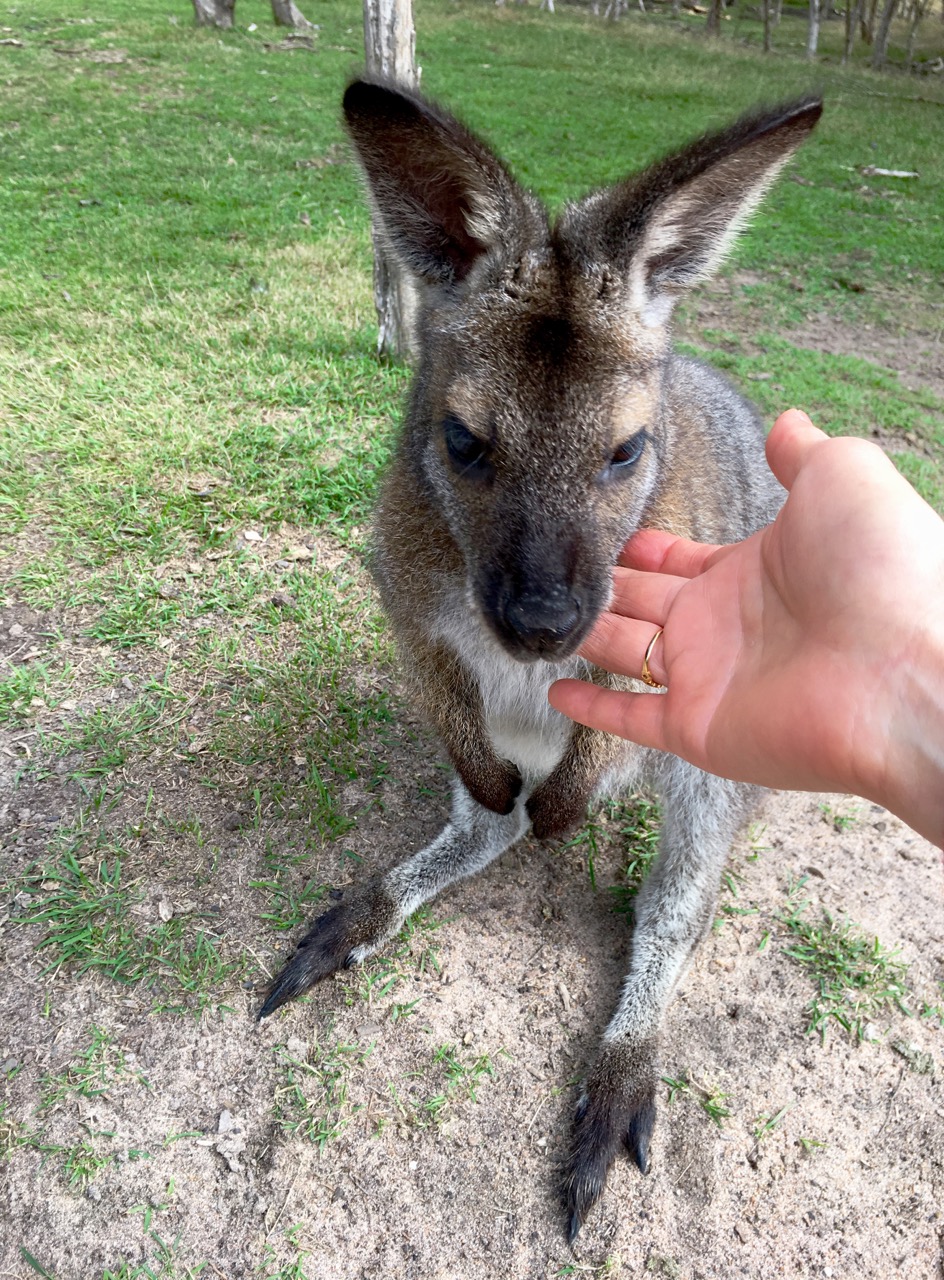
That expression… I don’t even know how I caught it on camera
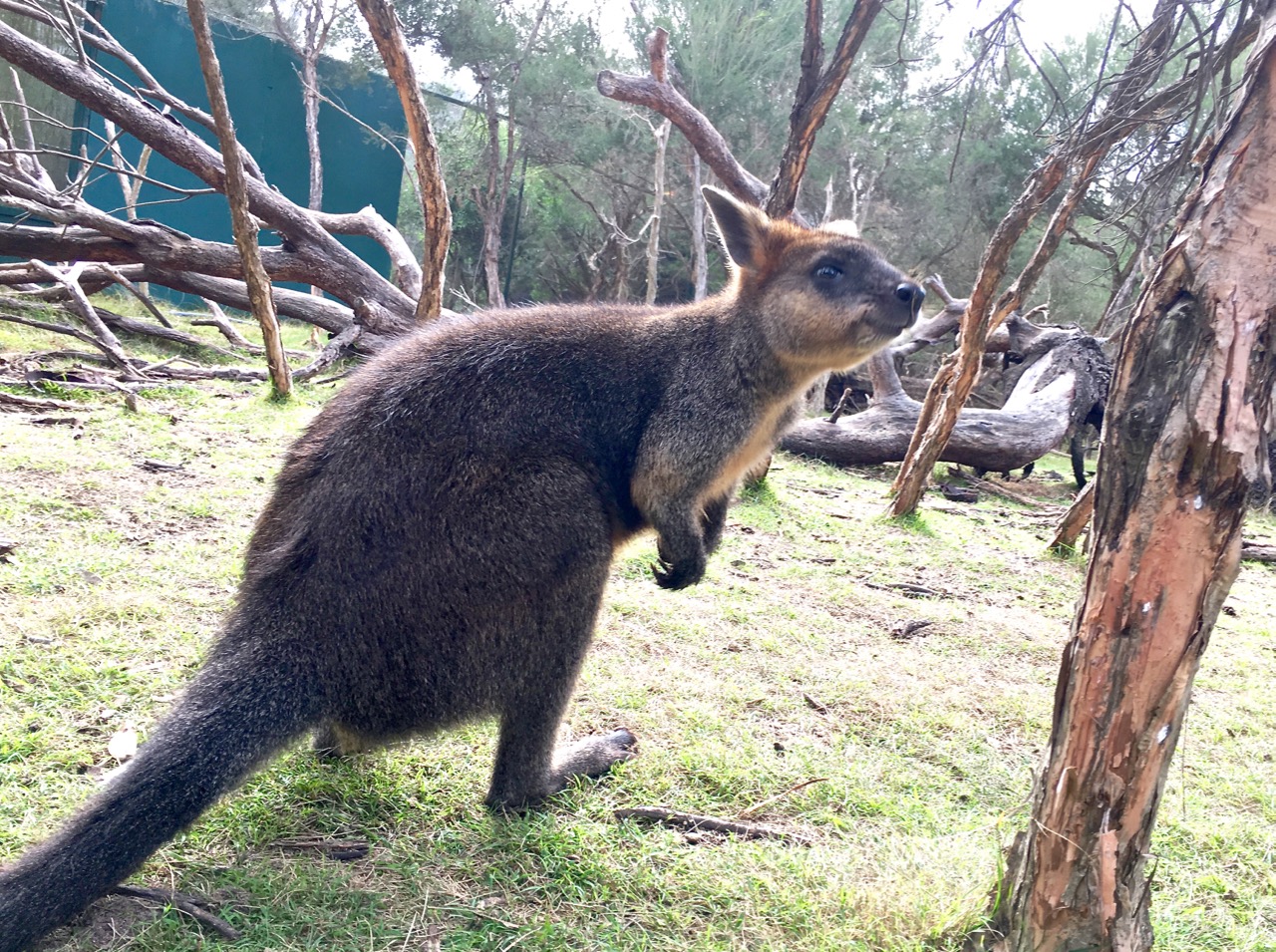
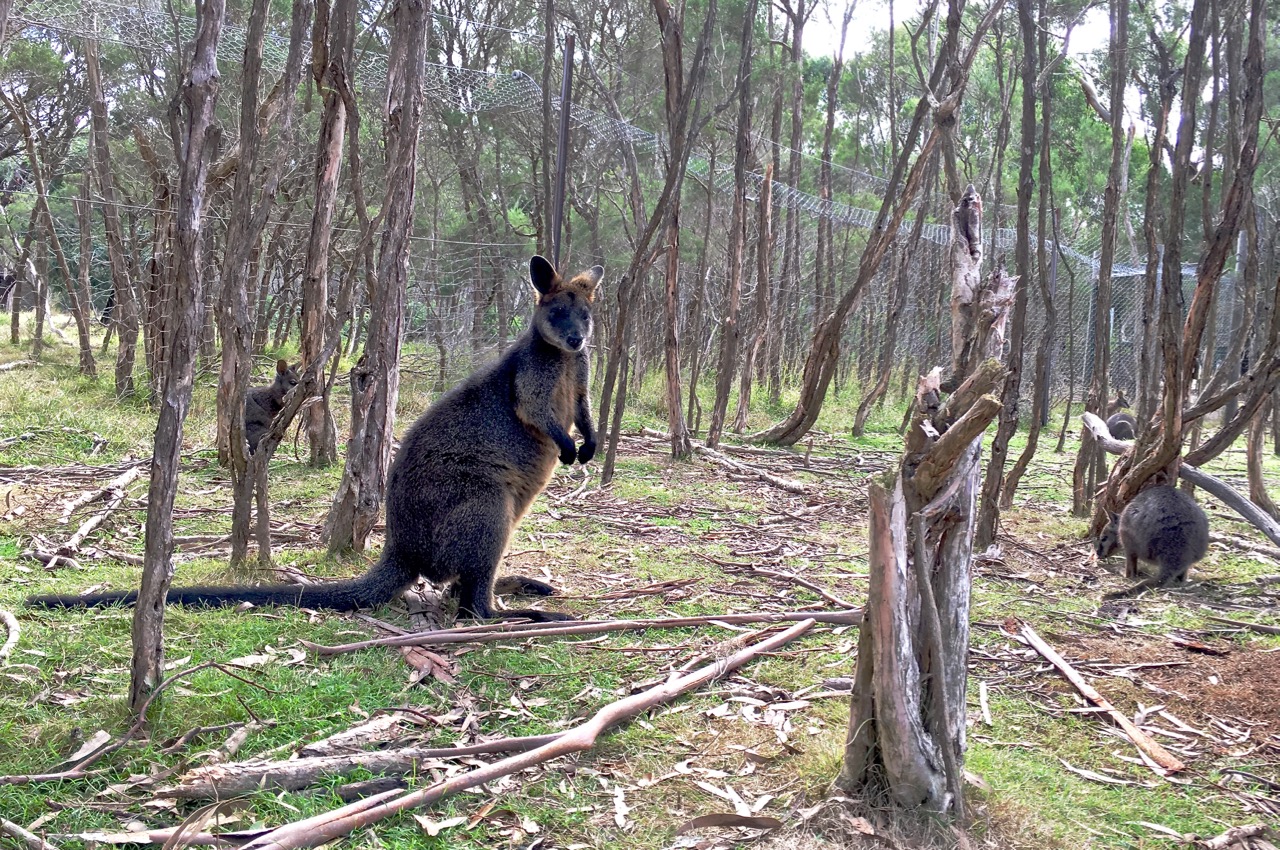
Adult kangaroos are wary and less food-motivated; they keep their distance. This one’s probably a male—stood up as tall as a person, so I didn’t dare get too close.
Maybe it was the season, but I didn’t see any moms with joeys in their pouches.
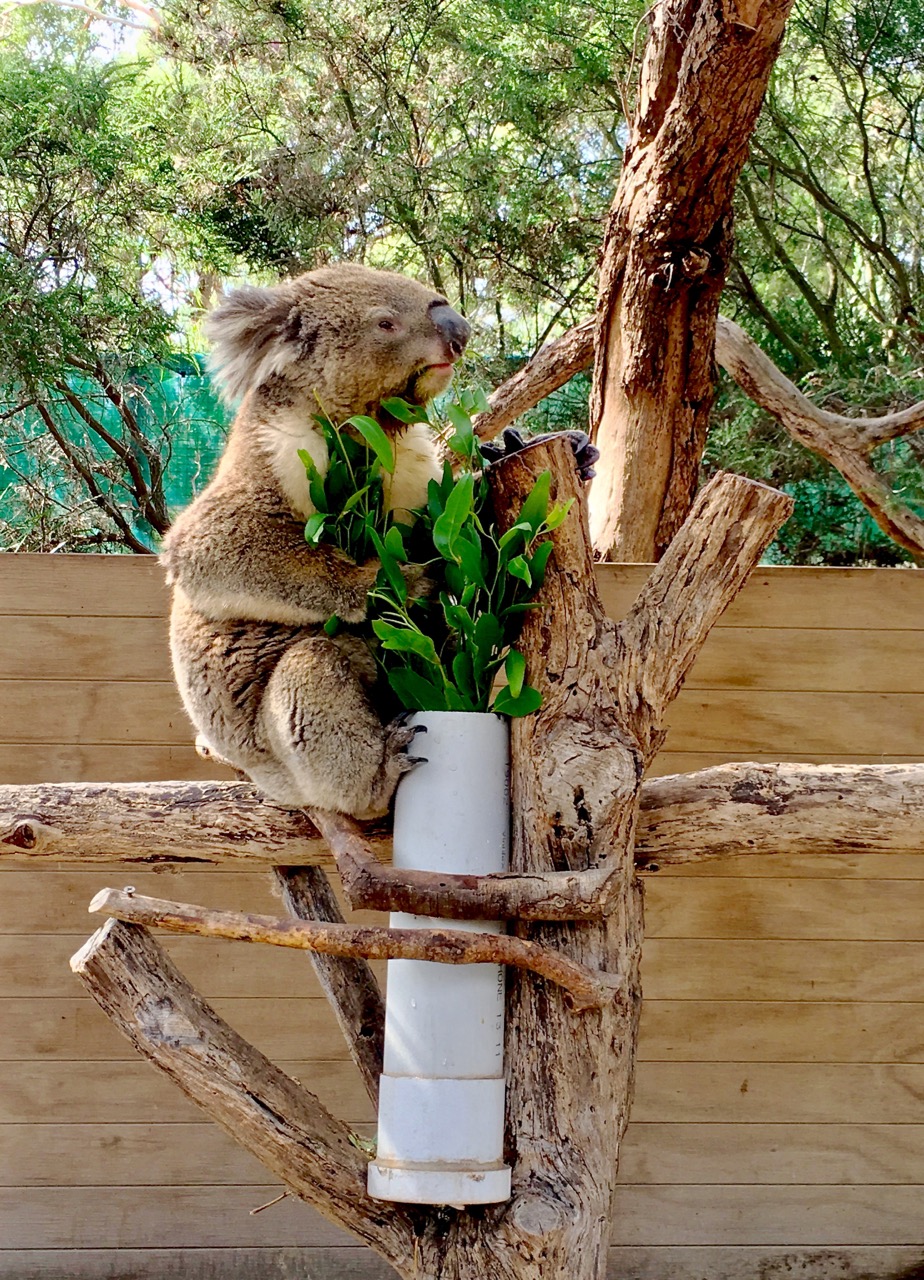
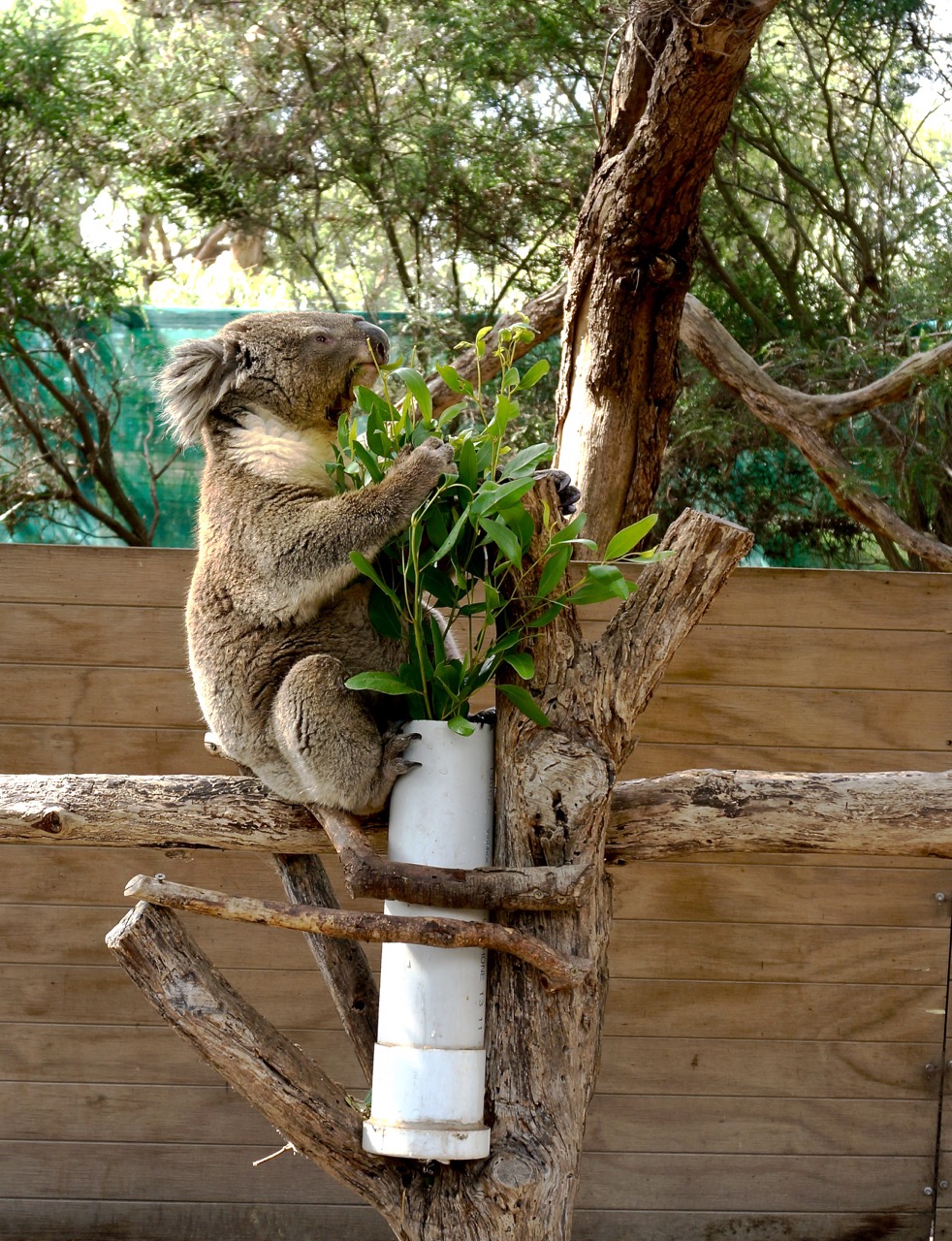
Koalas are the stars here. Two koalas sat on their thrones, elegantly munching leaves and barely moving, with staff attending nearby. To take a photo with a koala you need to buy a ticket at the visitor center. I’d spent too long with the wallabies and ran out of time, but the staff kindly stepped aside so I could take some nice koala shots.
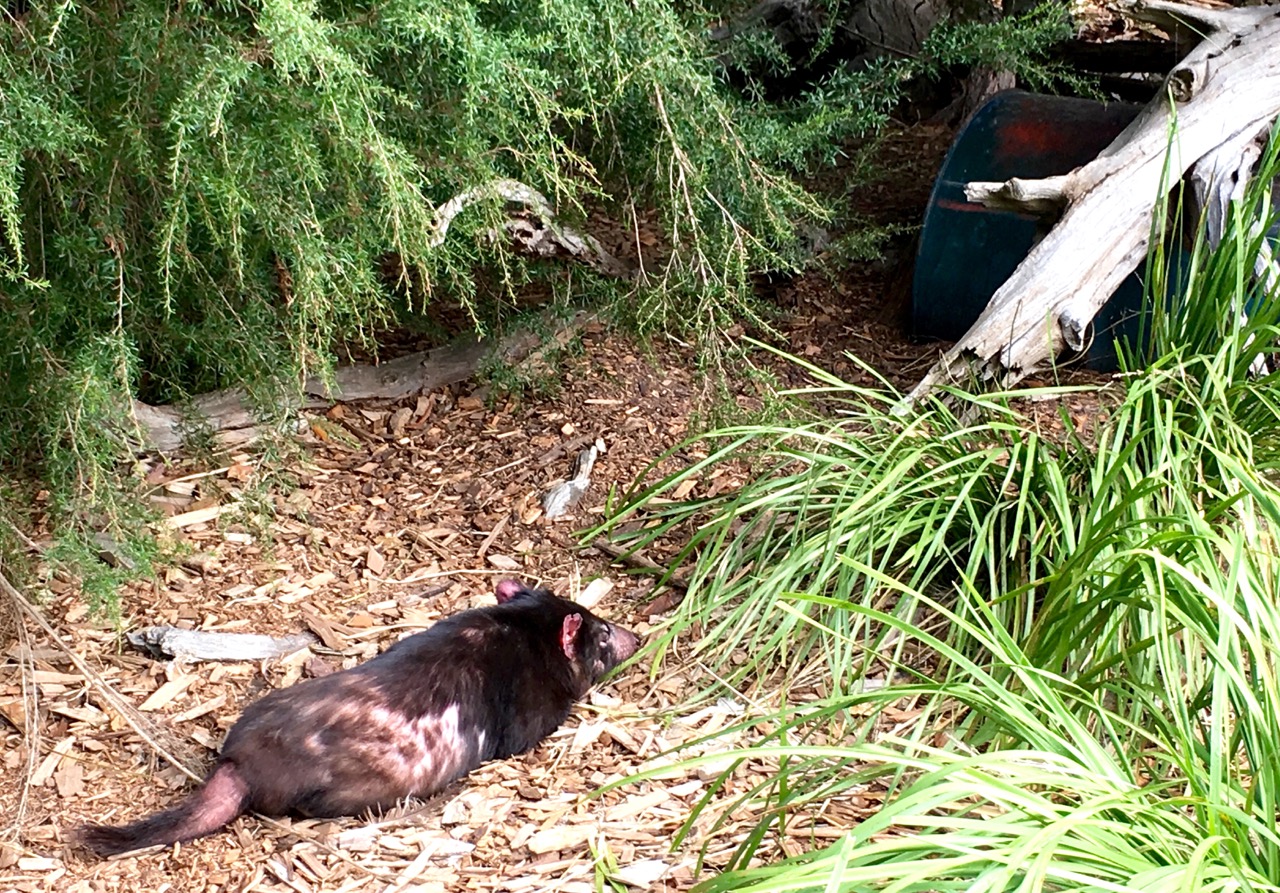
This not-so-pretty fellow is a Tasmanian devil, a carnivorous marsupial that’s now endangered.
A couple with a child and I tried to wake it to see that “devilish” face—no luck.
Plenty of shy residents hid away—just nameplates, no animals in sight: things like dingoes, owls, wedge-tailed eagles, quolls (aka native “cat”) and more. In Australia, even wildlife are eco-friendly—they come with built-in “bags” (pouches)!
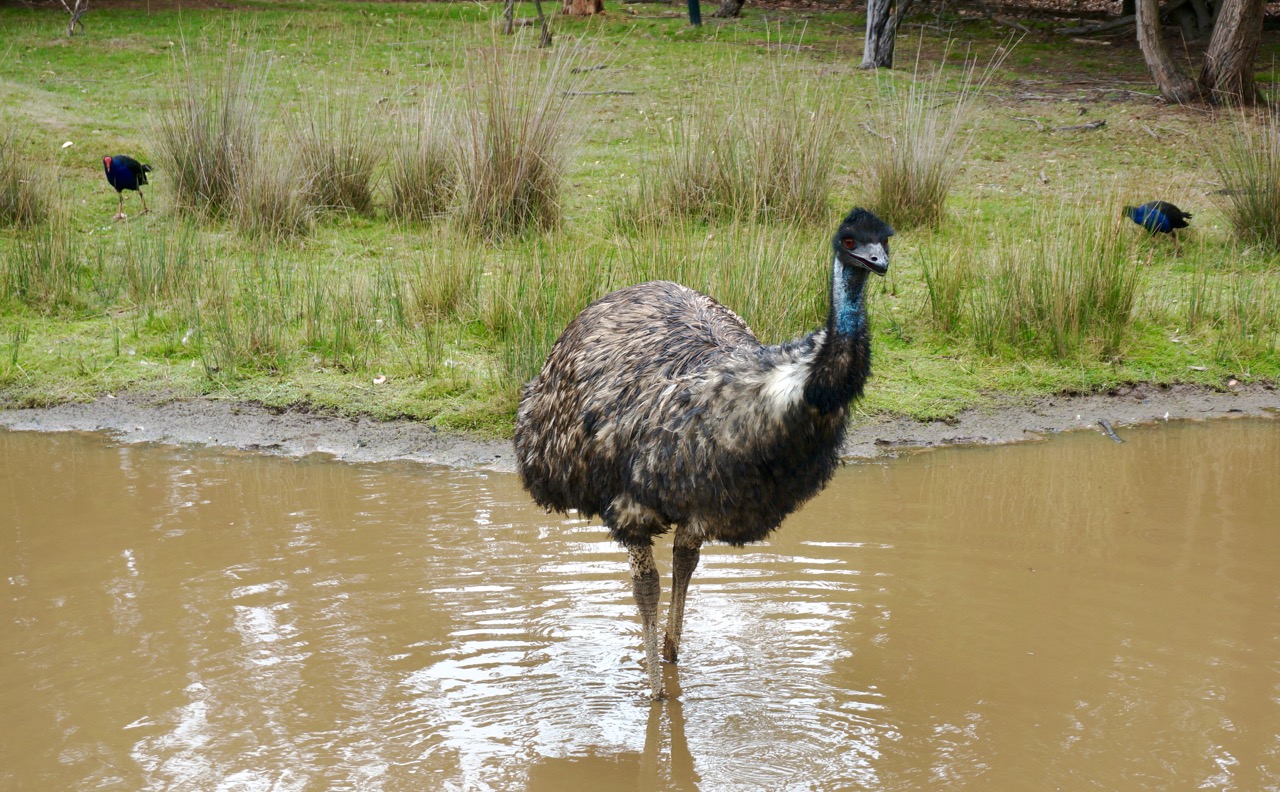
Don’t confuse it with an ostrich—though it looks similar, this one’s an emu. (Just say the first half of the Chinese name’s sound)
Waterfowl and gamebirds are everywhere—I can’t name them all
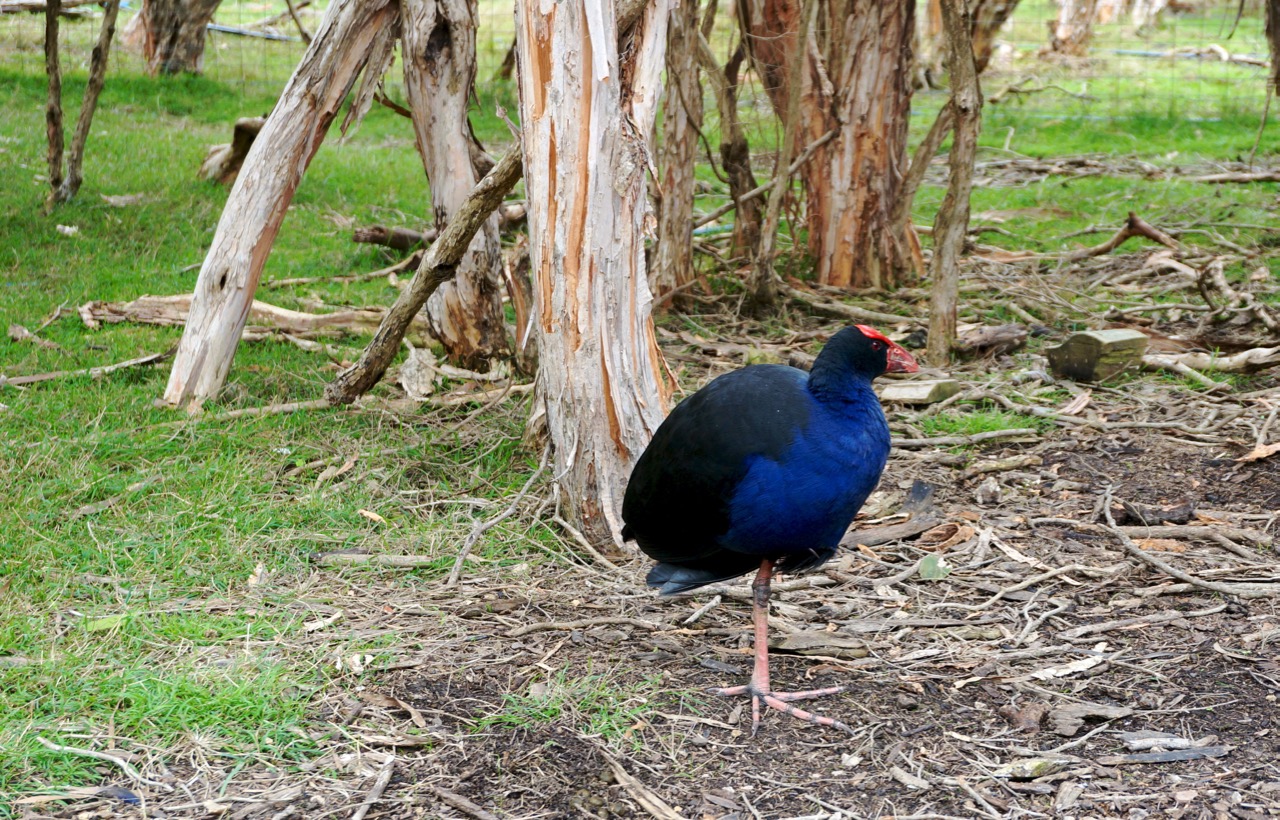
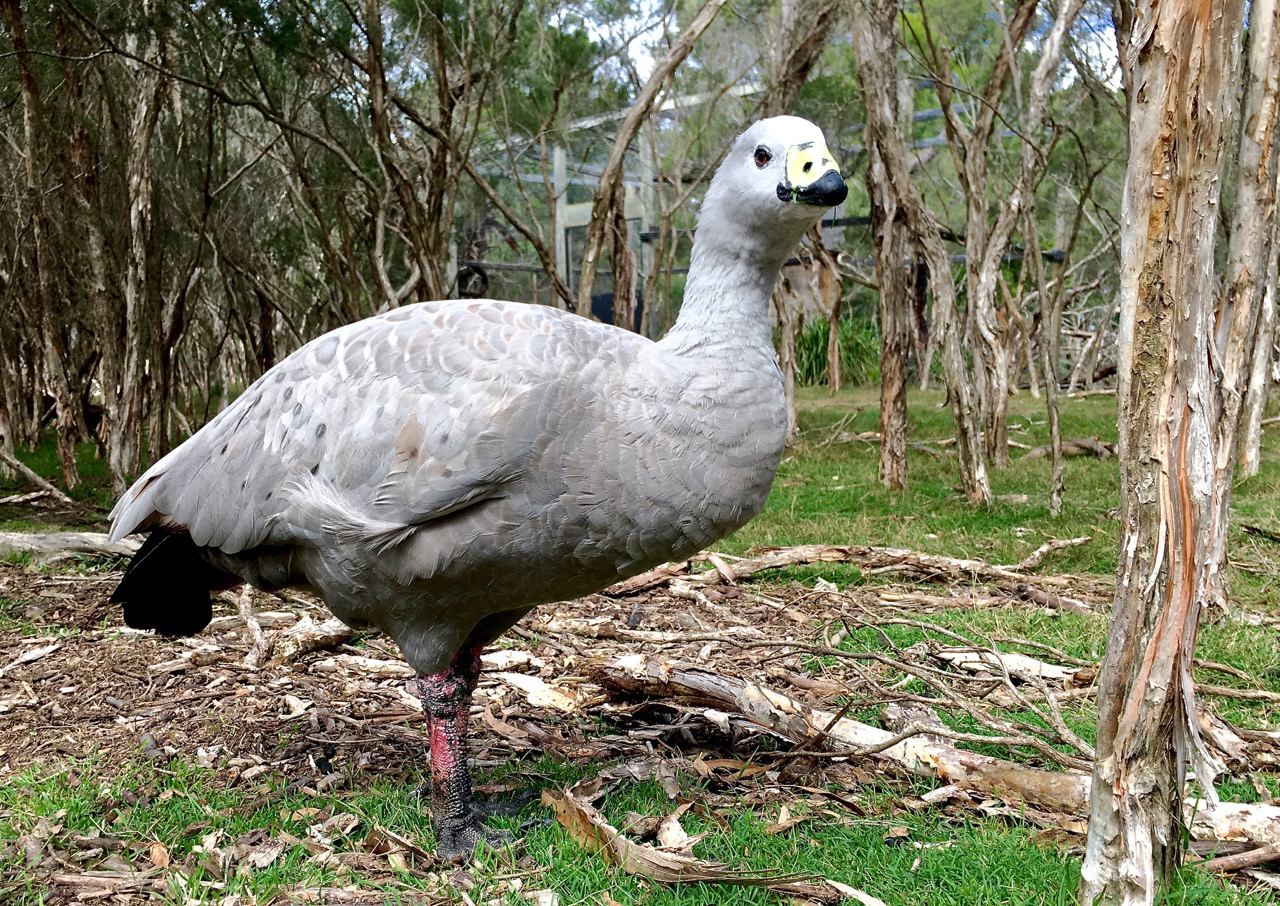
What a happy life
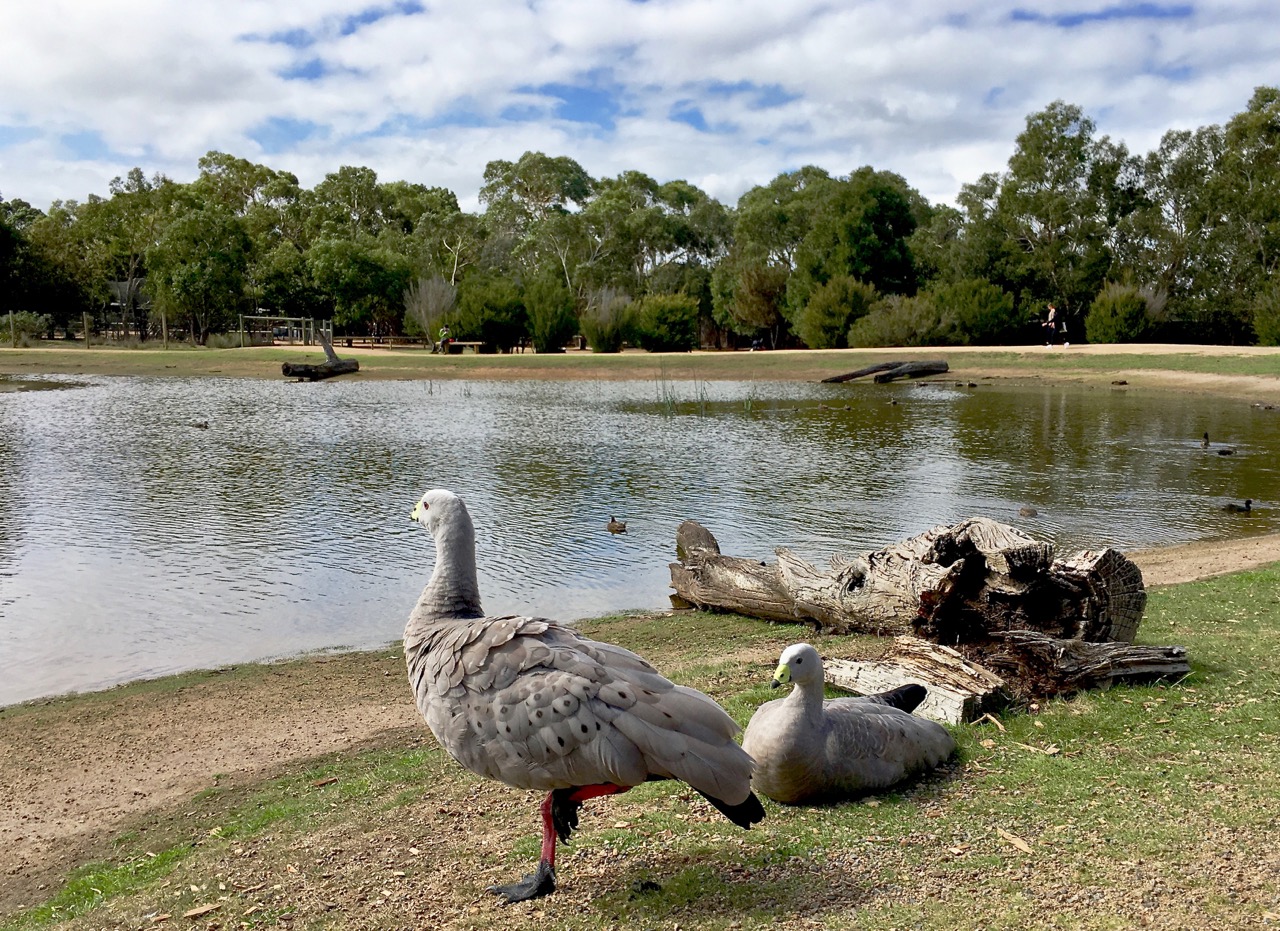
Love this candid shot
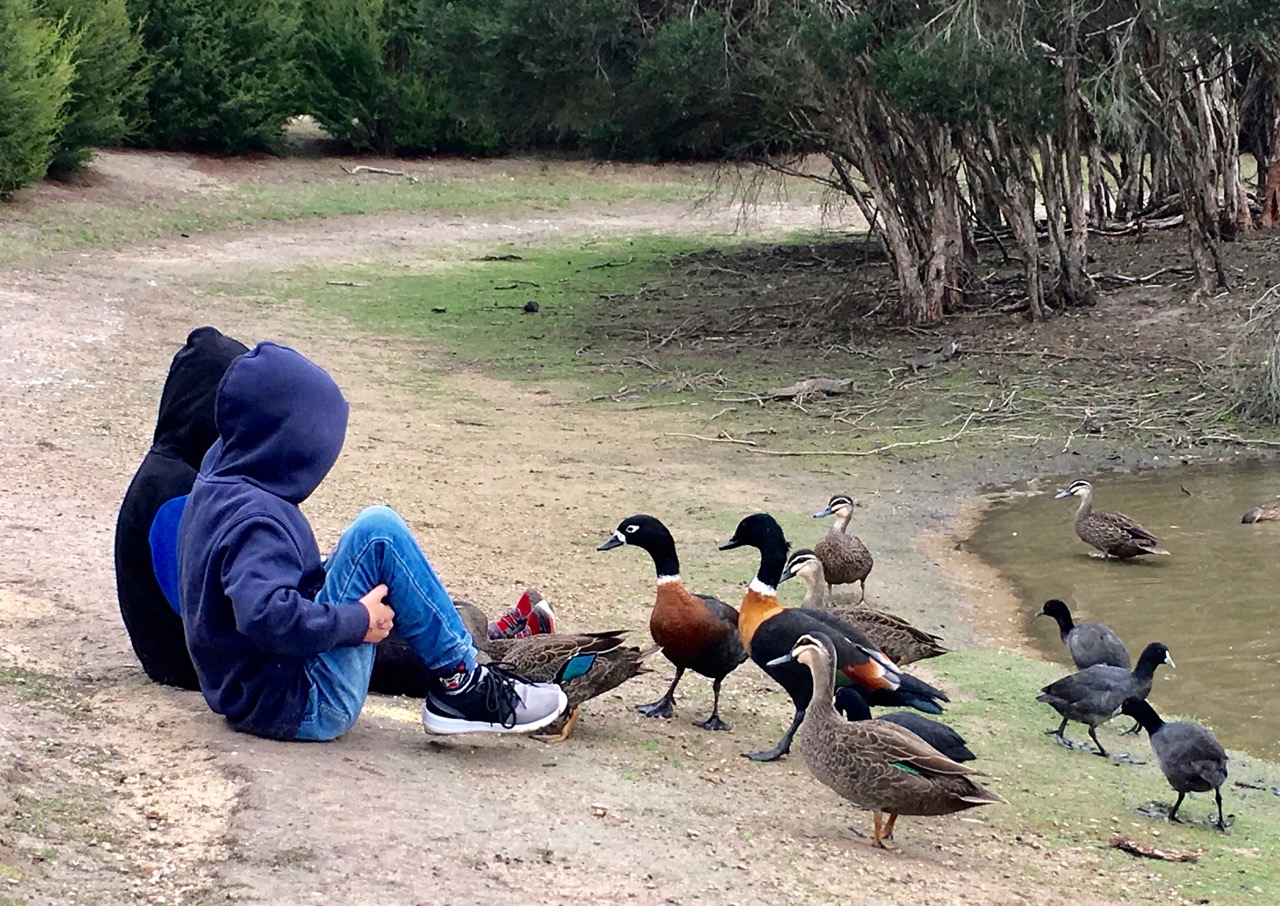
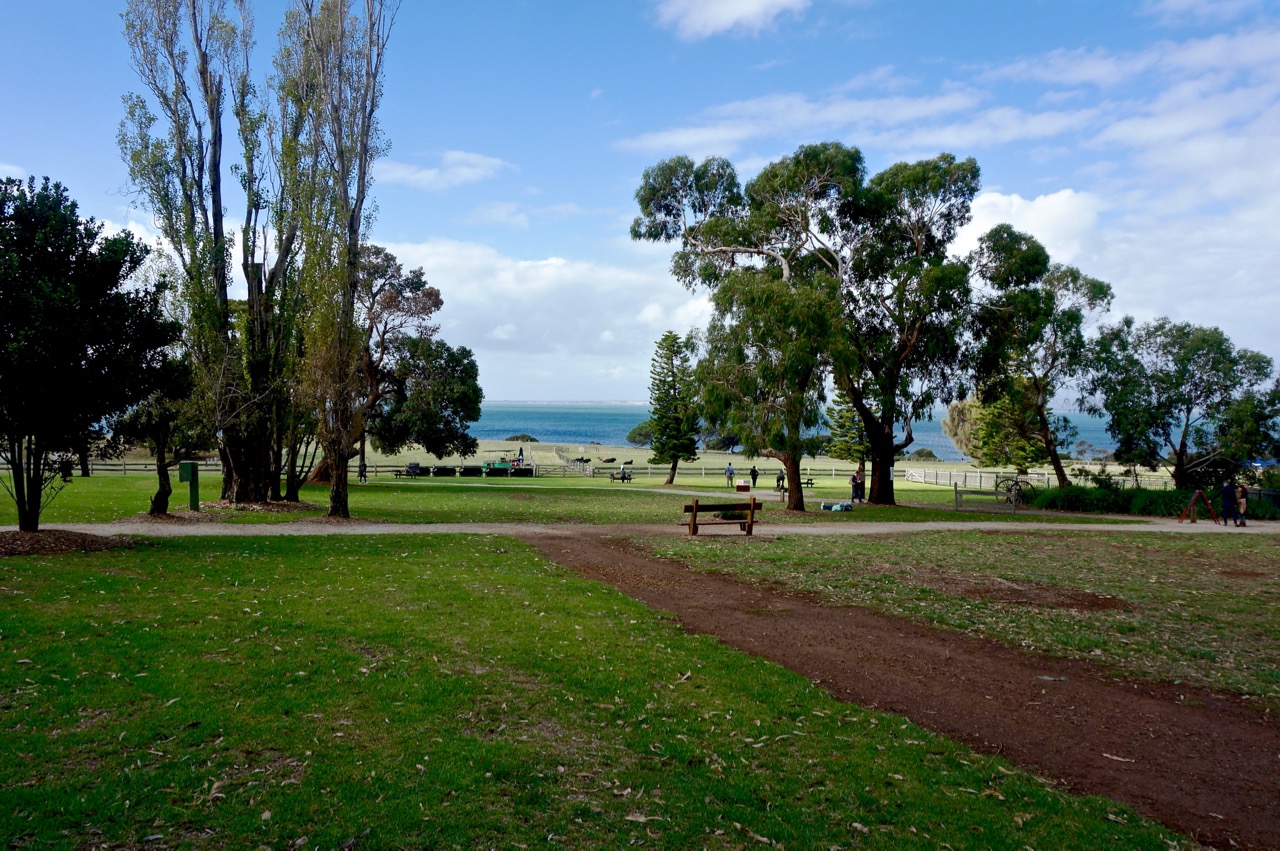
The second stop was Churchill Island Heritage Farm.
They run daily demos. I was most excited for the sheepdog herding, so I headed straight there on arrival.
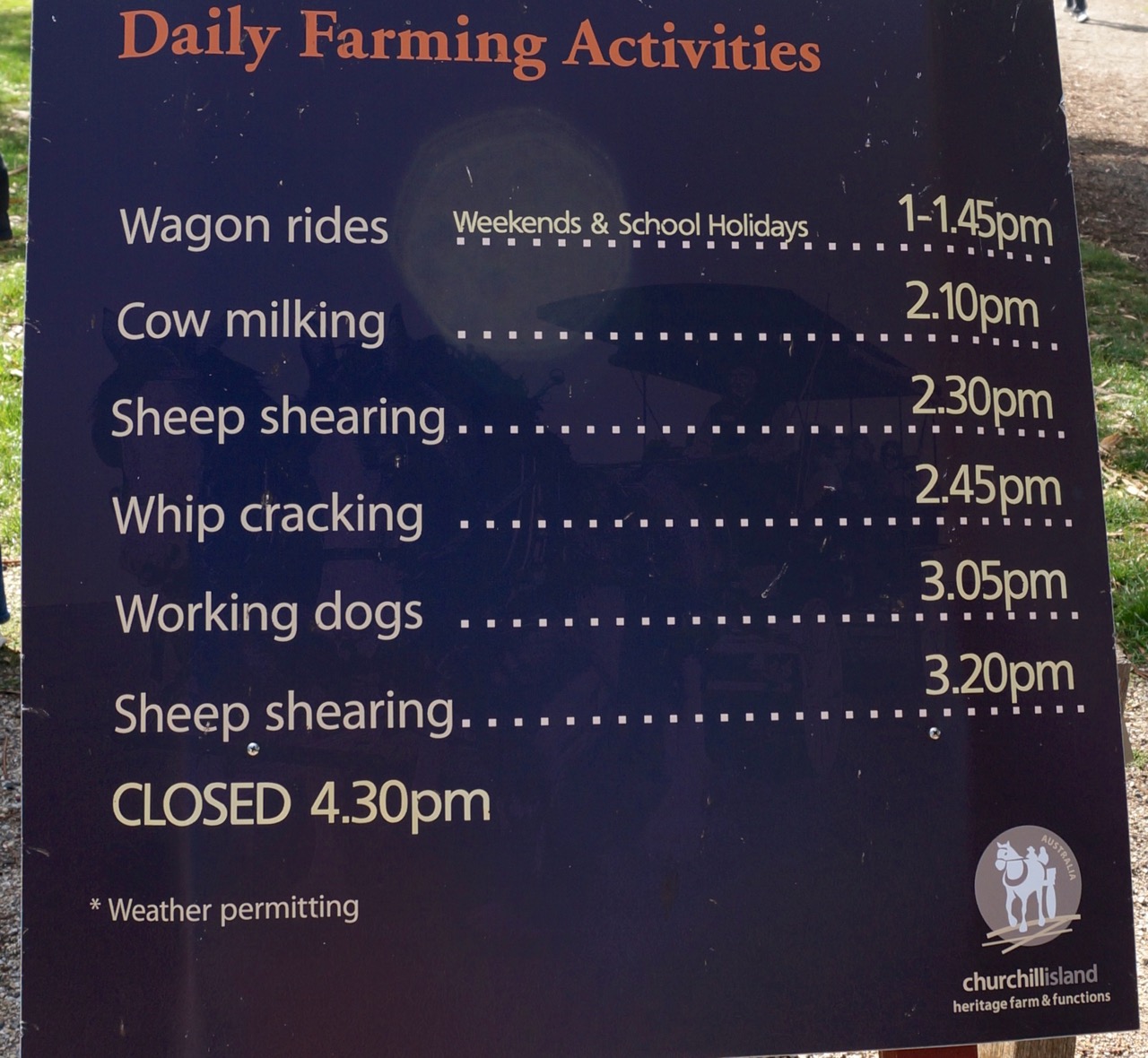
The show had started. The sheepdog’s job: bring the flock from the far corner of the field into the pen.
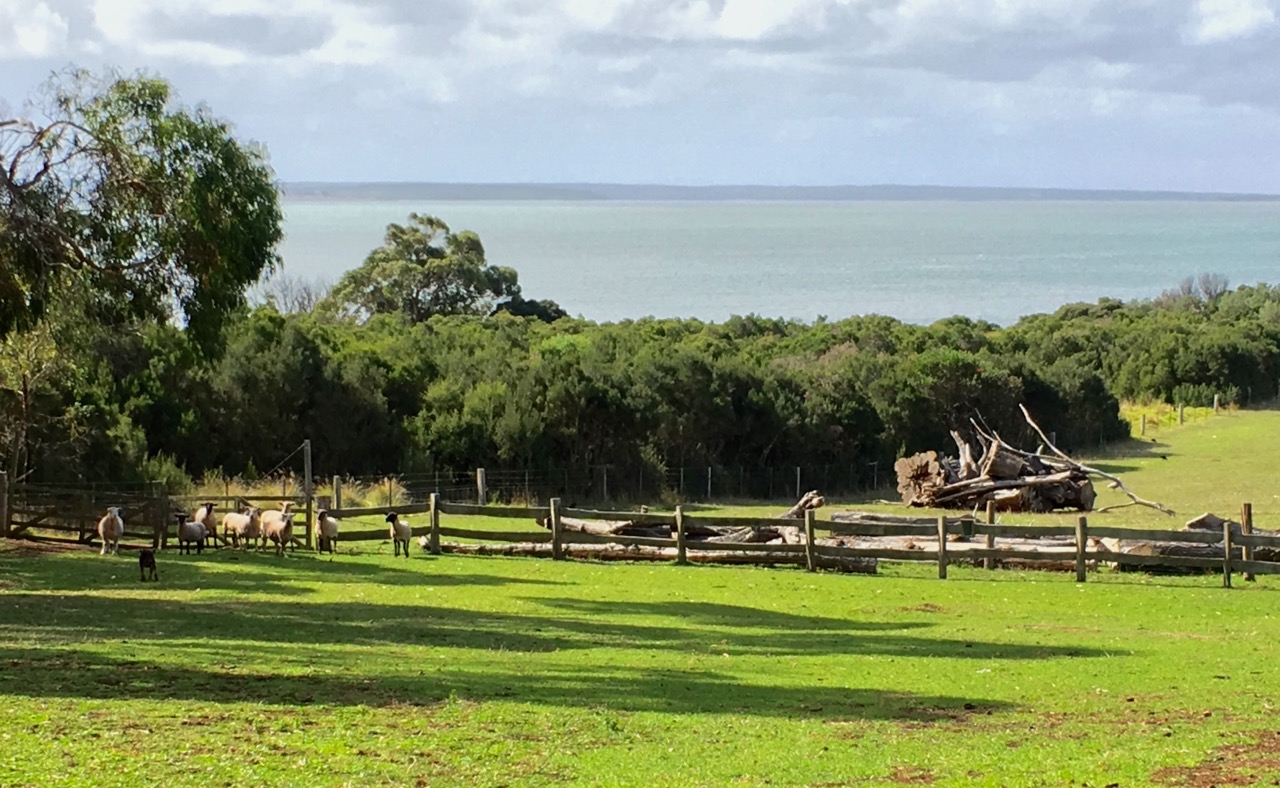
Sheepdog work is best on video. Mafengwo only allows .swf uploads, so I uploaded my .mp4 elsewhere—hope this link opens for you...
***!ApmUxJHMH0_kp2mGU59sNhVMsala
A few sheep were quite stubborn—unafraid of the dog and even butting heads—but in the end the dog nailed it and got every sheep into the pen.
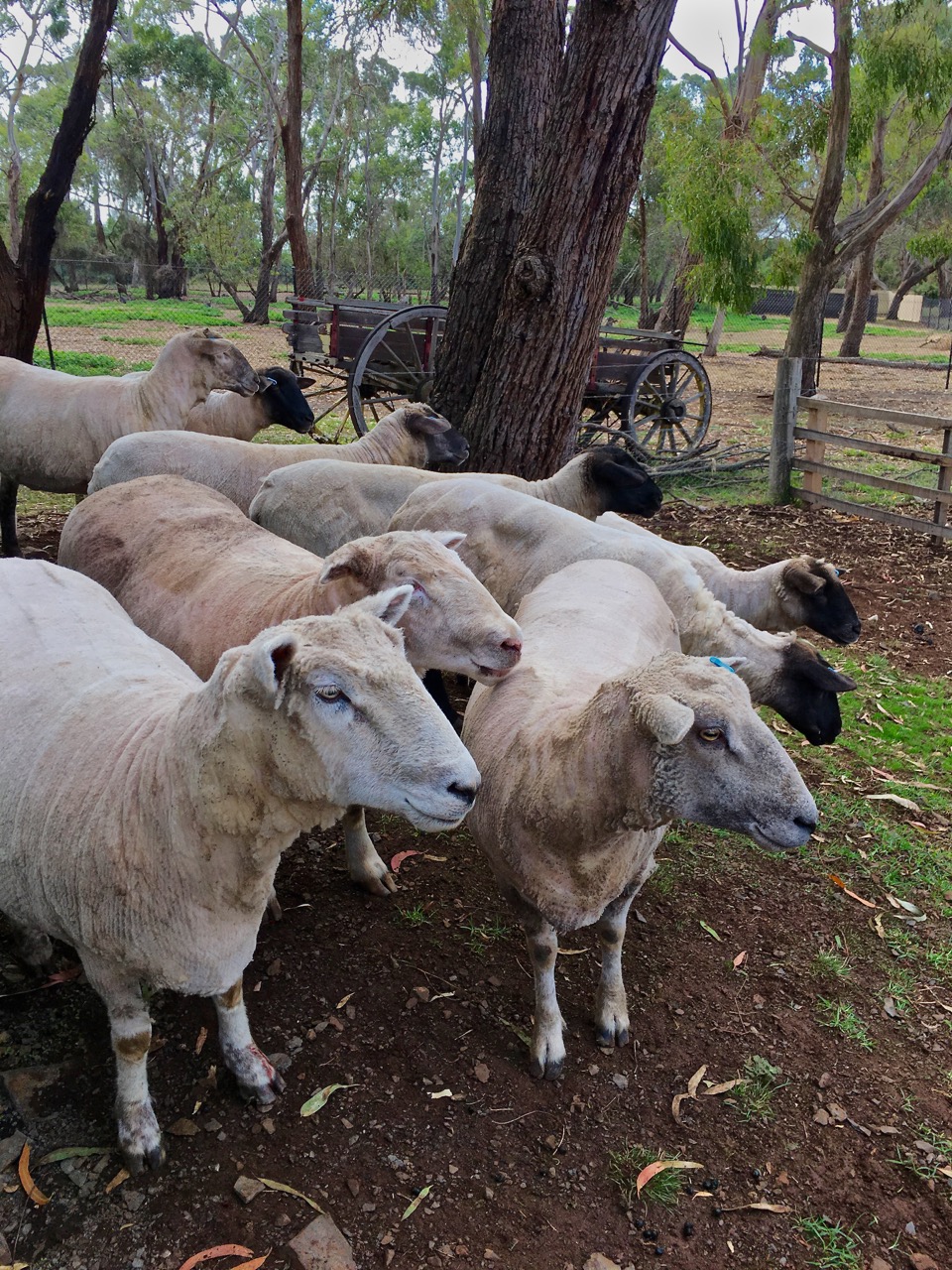
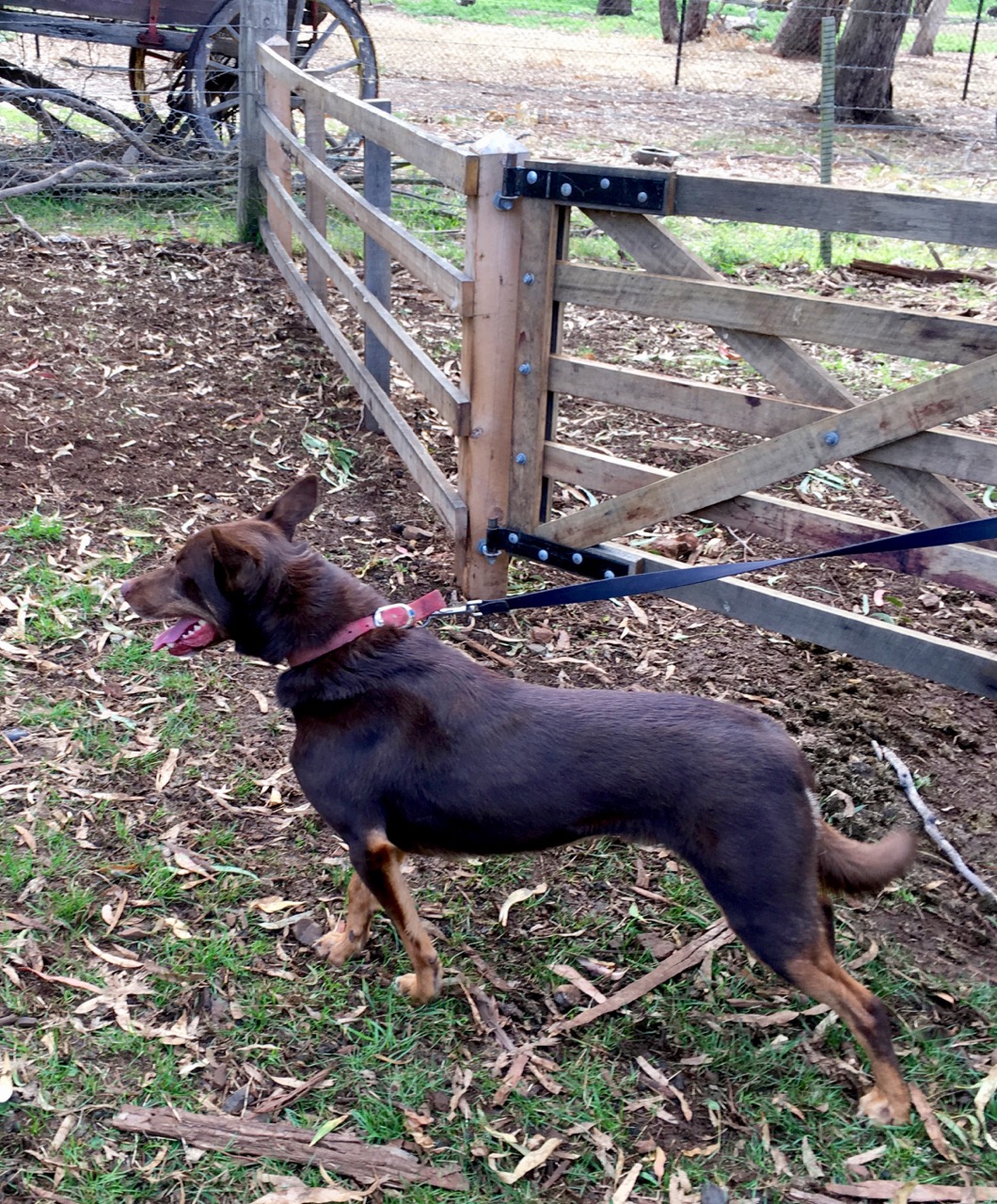
Mission accomplished, the dog was still amped—its handler held it back while it kept barking to keep the flock in line.
Next up: sheep shearing. The cowboy-styled host opened with jokes and had everyone cracking up.
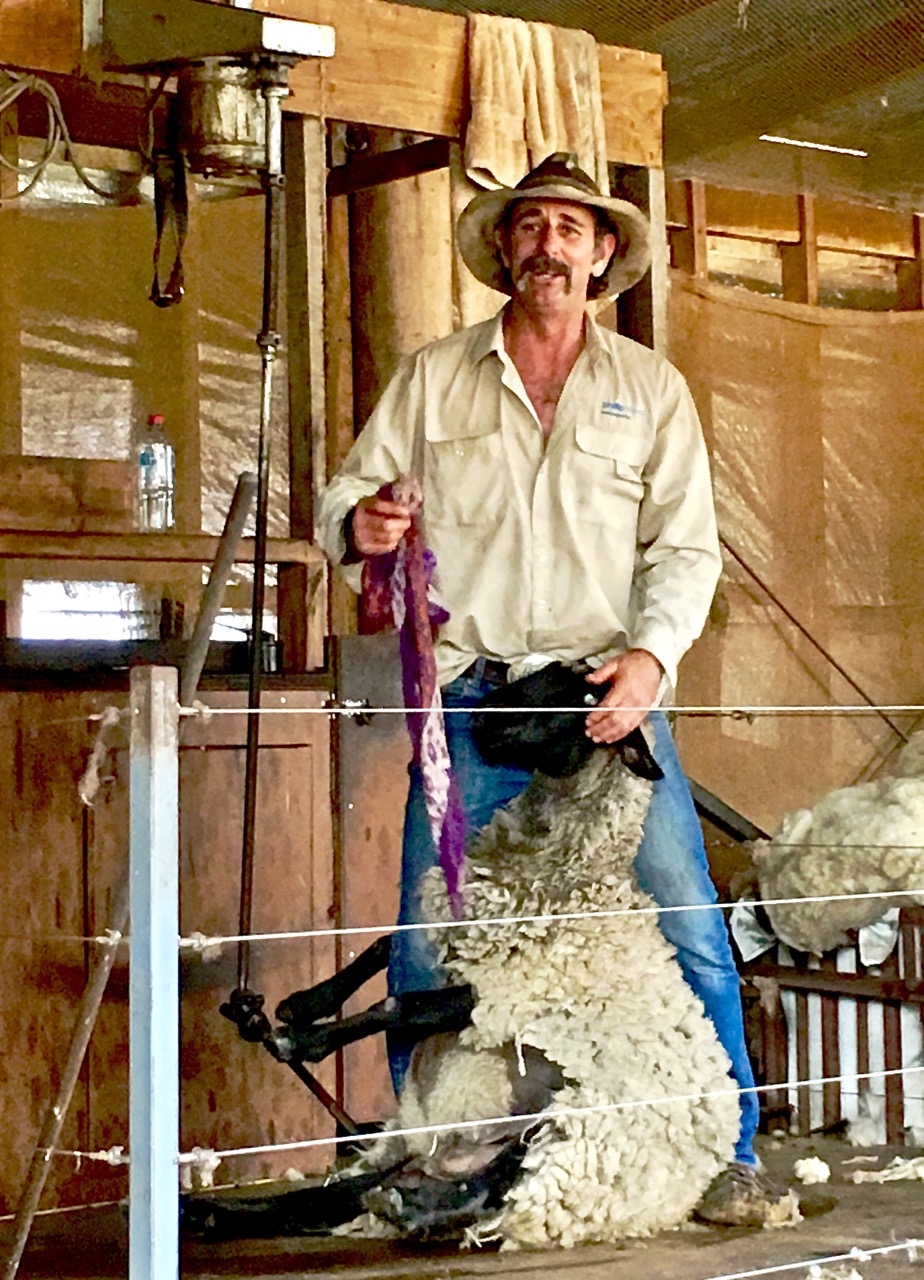
Once he started, he was lightning fast. In his hands the sheep went limp and cooperative—he finished a full fleece in seconds.
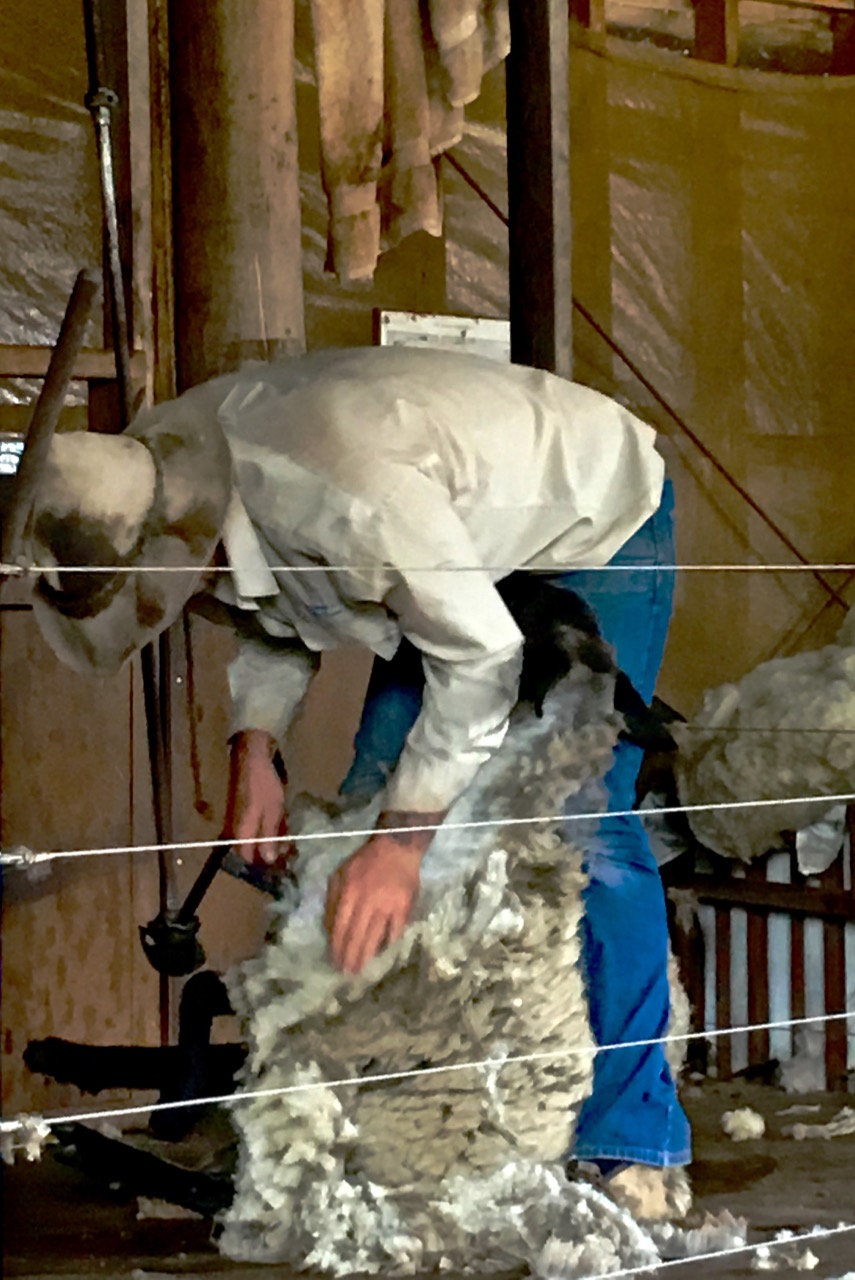
The waiting flock
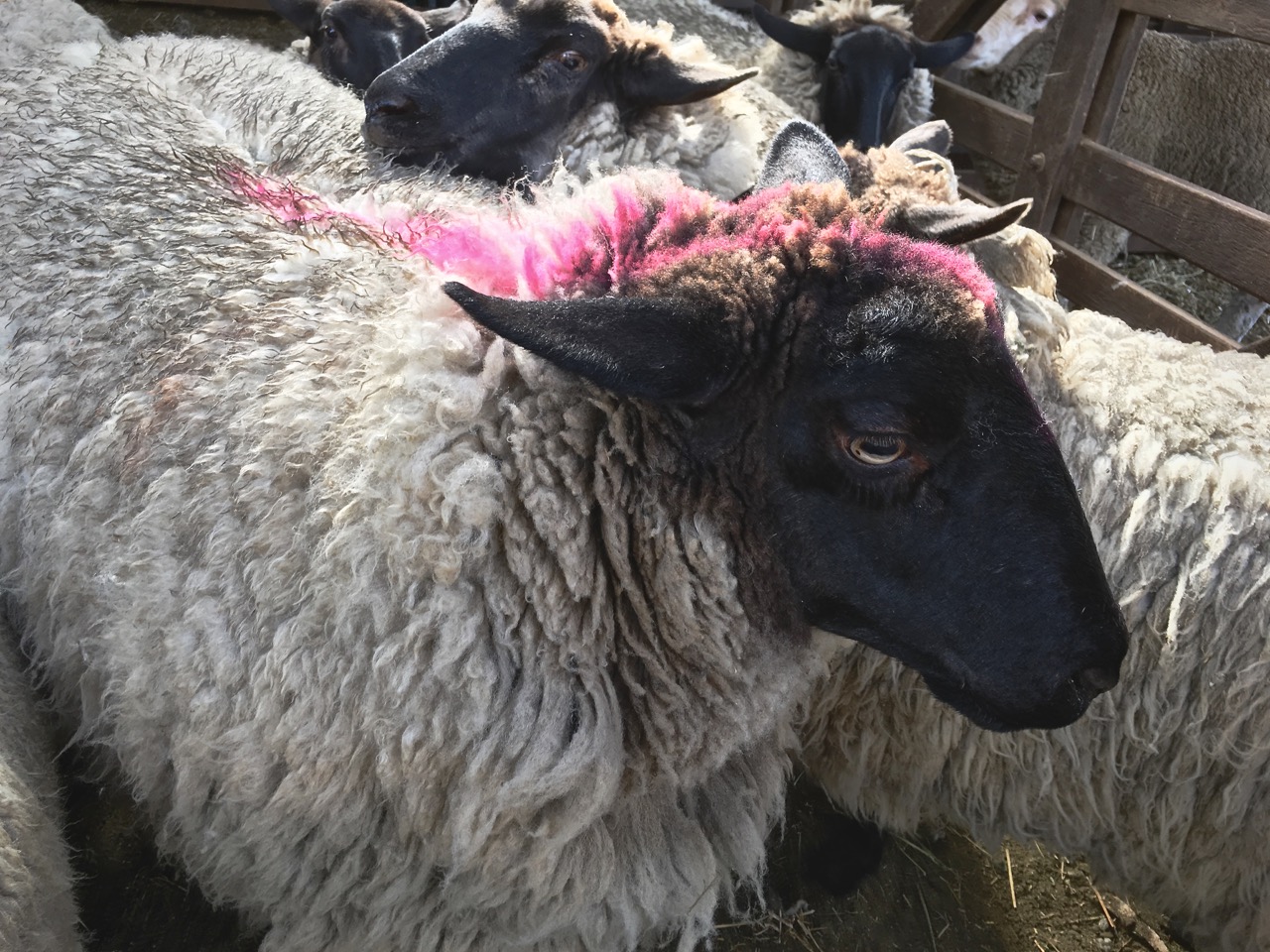
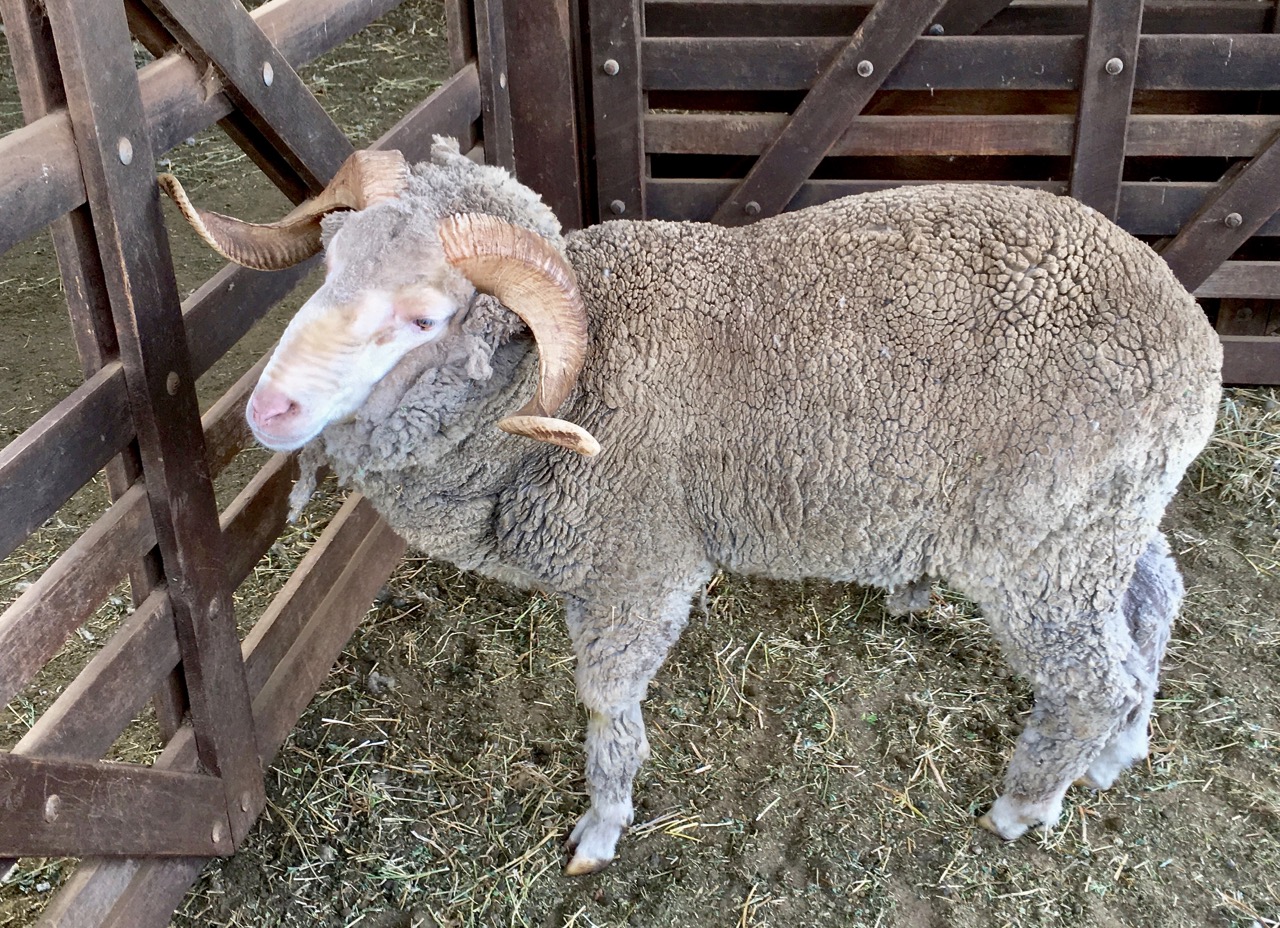
This ram was not happy about being separated from his ewes and kept ramming the fence between them.
This long-maned horse was a real prankster. At first it seemed friendly—trotted over when we called and enjoyed a neck scratch. Then, out of nowhere, it bumped me with its head—not hard, but it gave me a good scare. It then stood there with a cheeky look, clearly pleased with itself—equal parts annoying and funny.
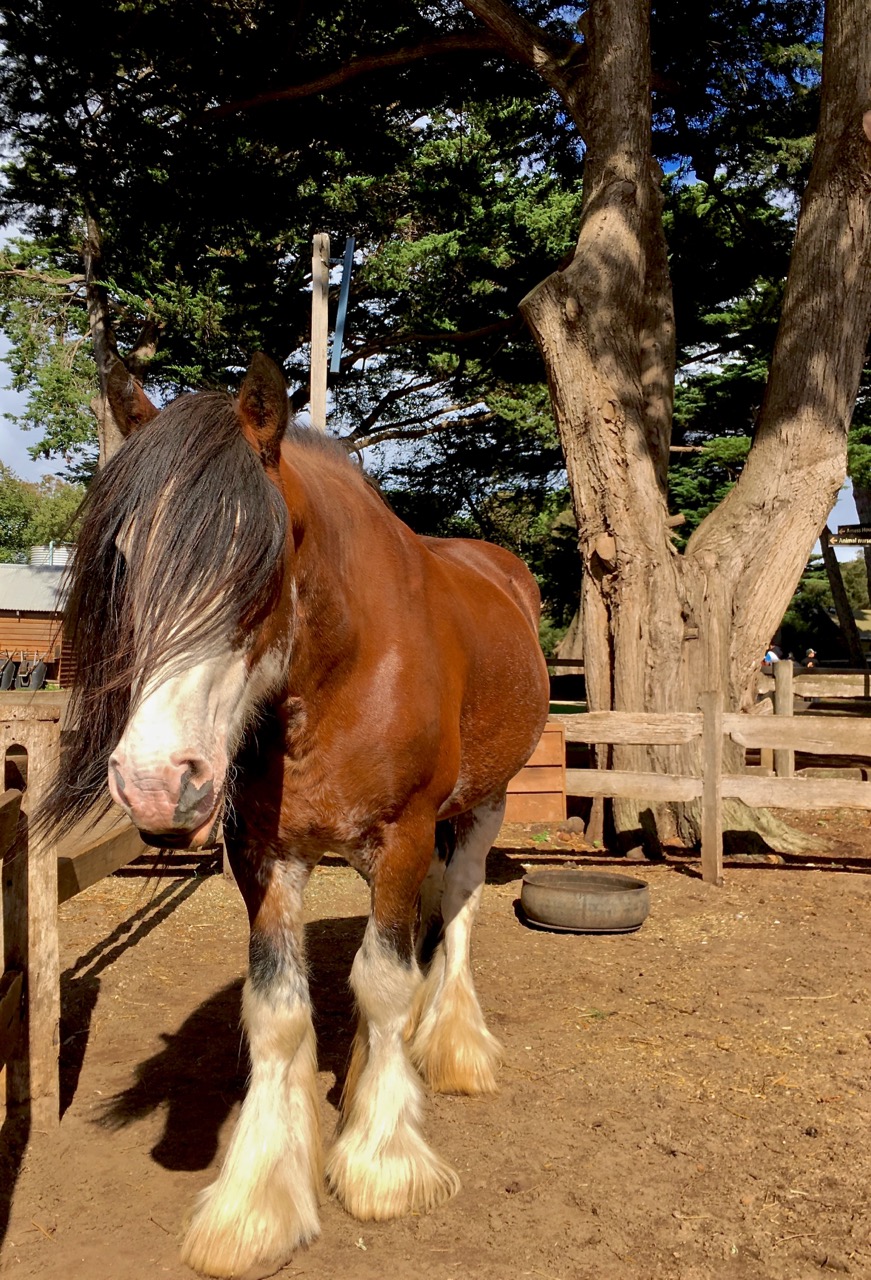
Best to steer clear of the rascal and go tour the farmhouse instead.
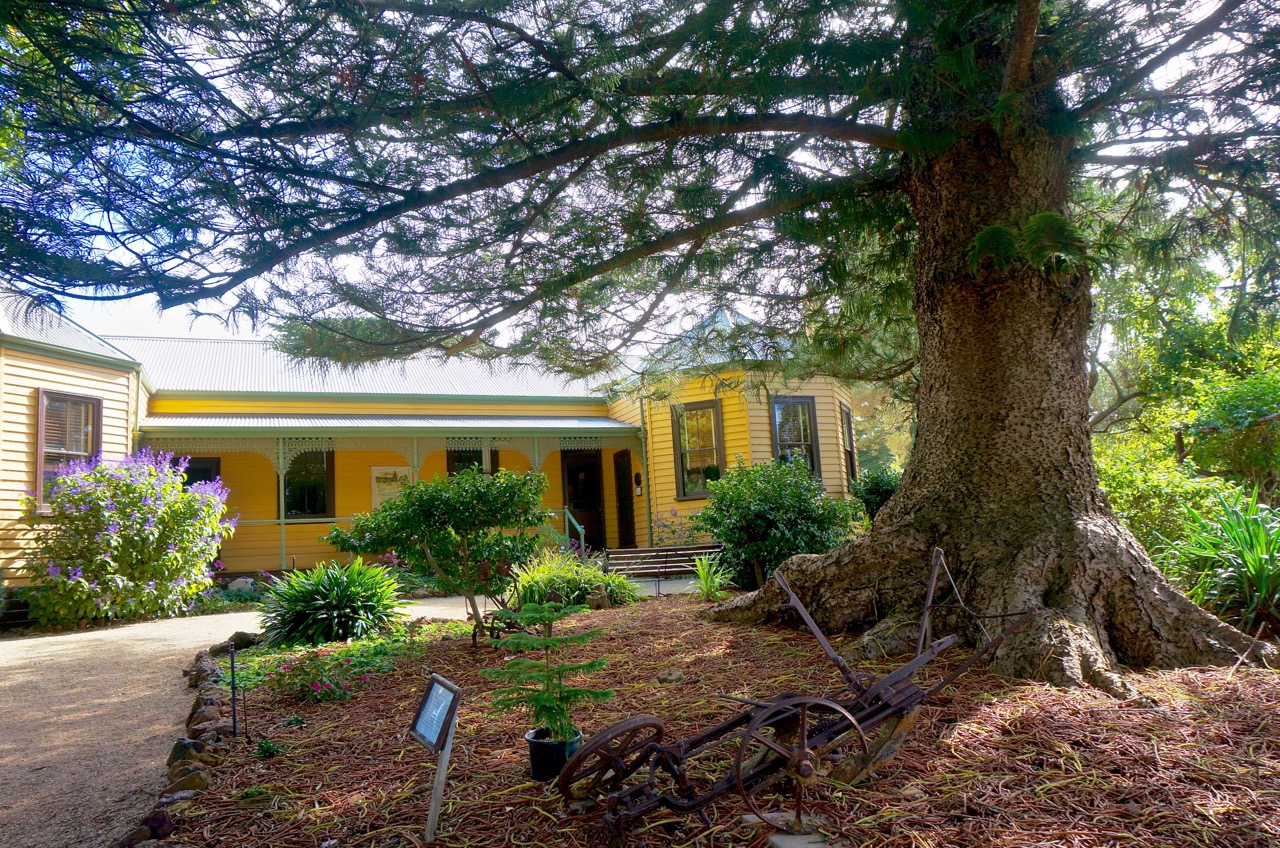
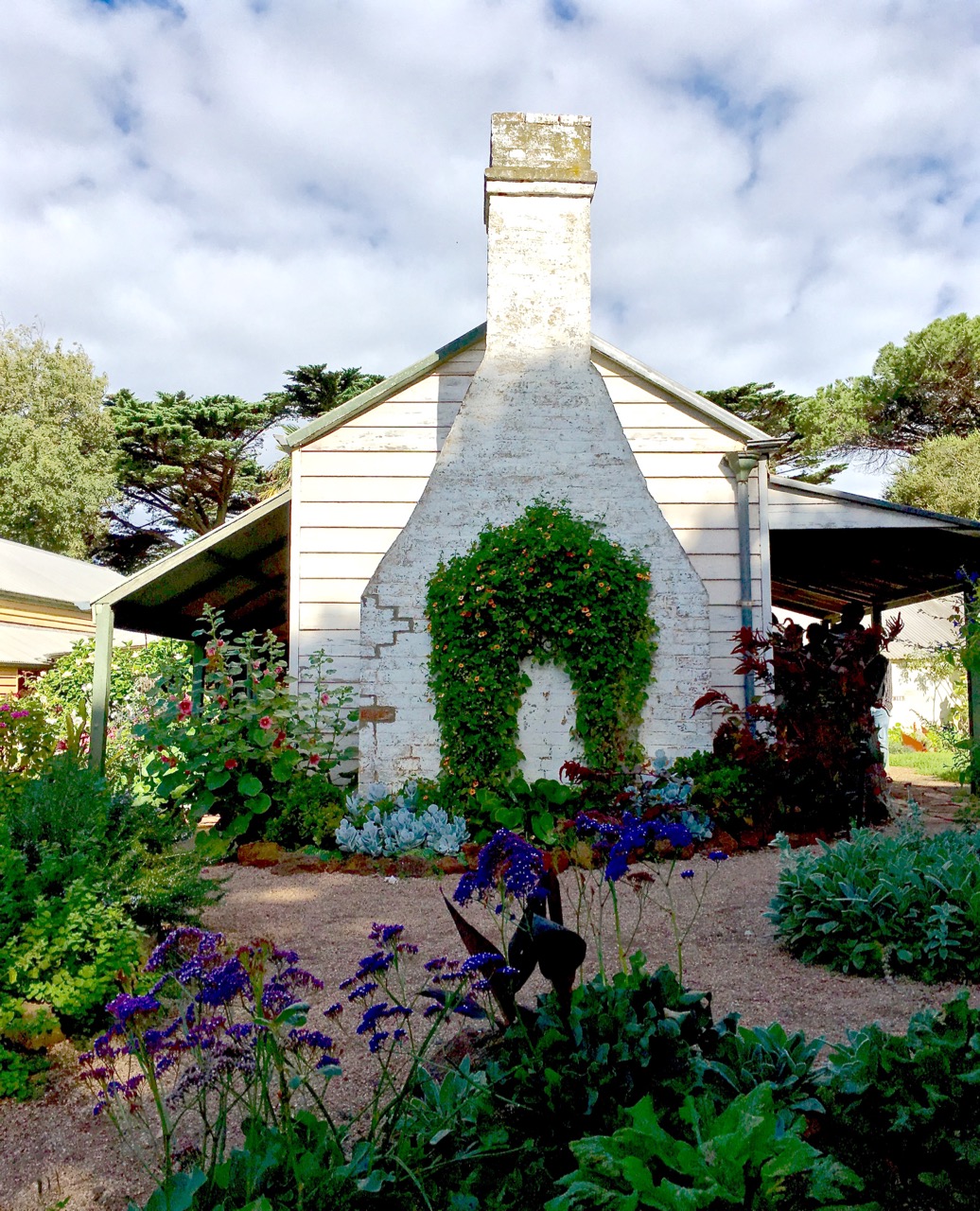
This is Victoria’s first farm, dating to the 18th century—classic European country style and historically significant.
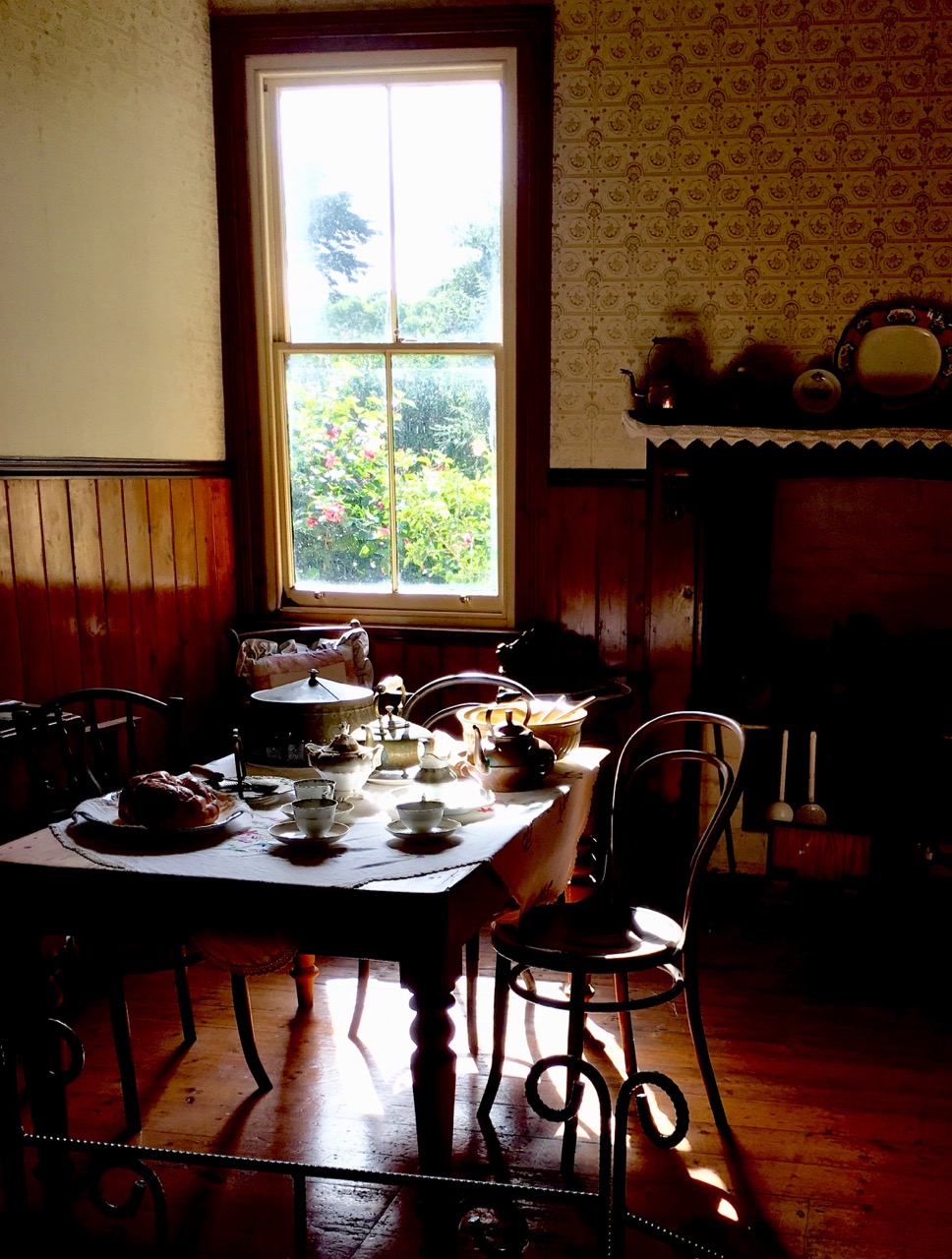
A shaft of sunlight on the dining table felt so cozy—pity I couldn’t capture it on camera.
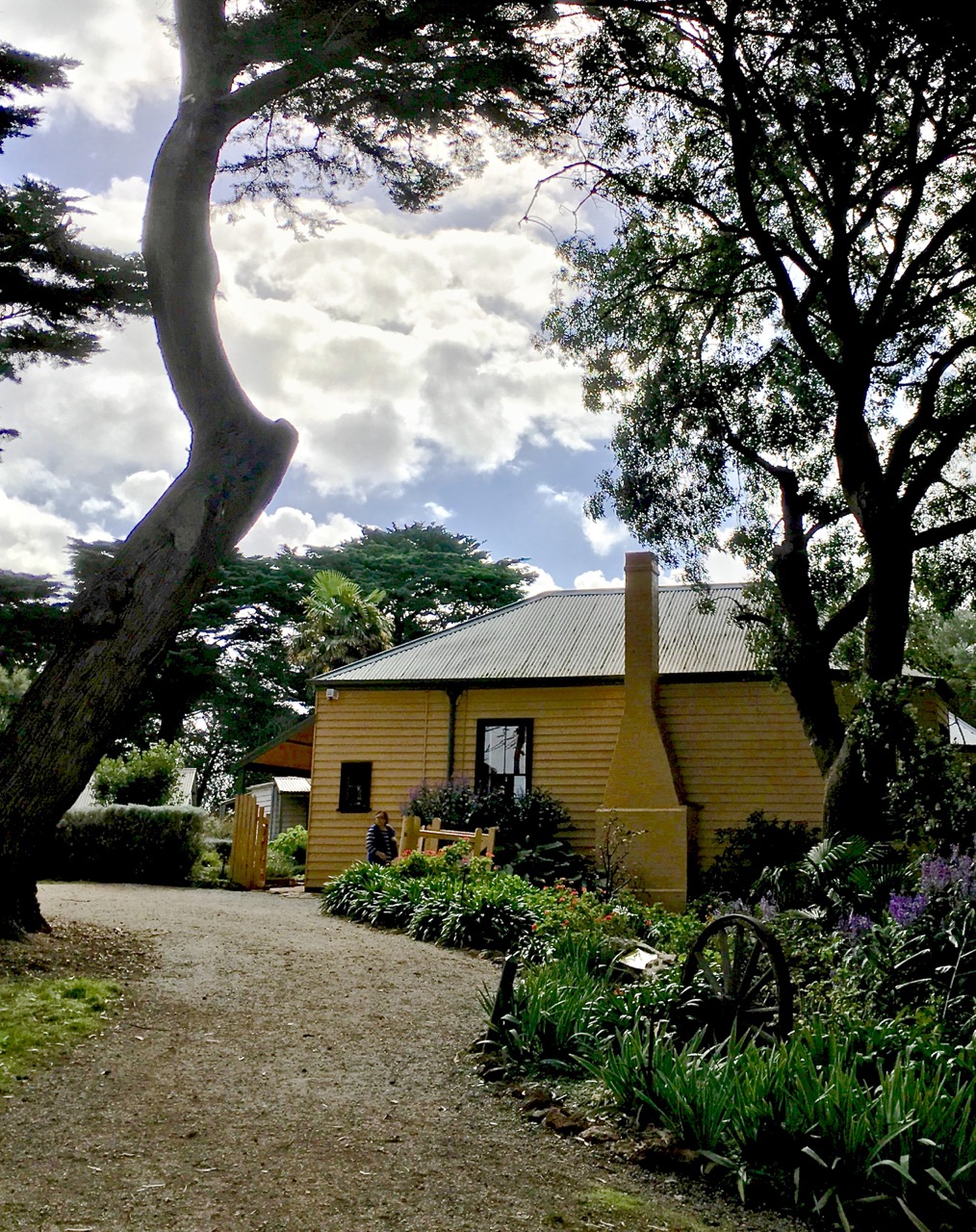
The farm sits on a tiny islet in the bay between Penguin Island and the mainland—very scenic.
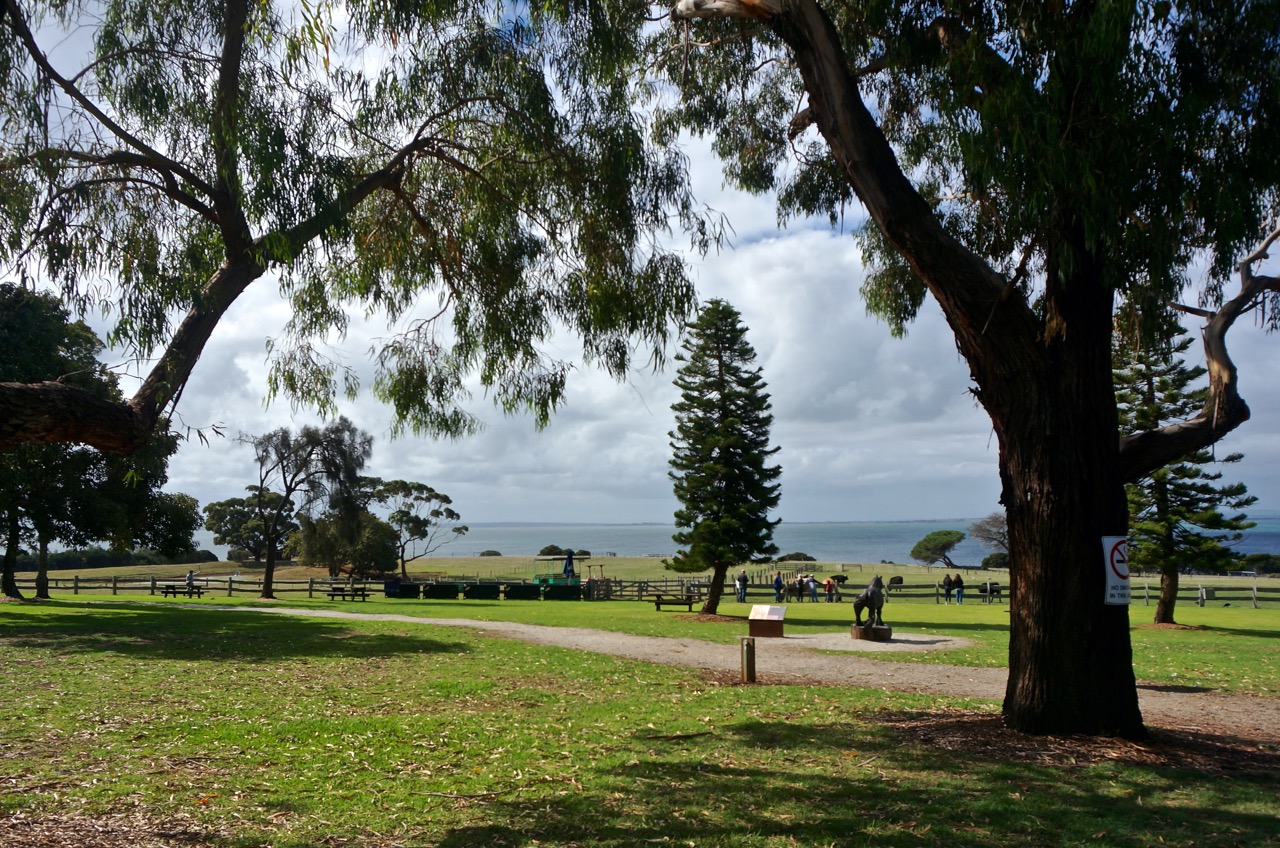
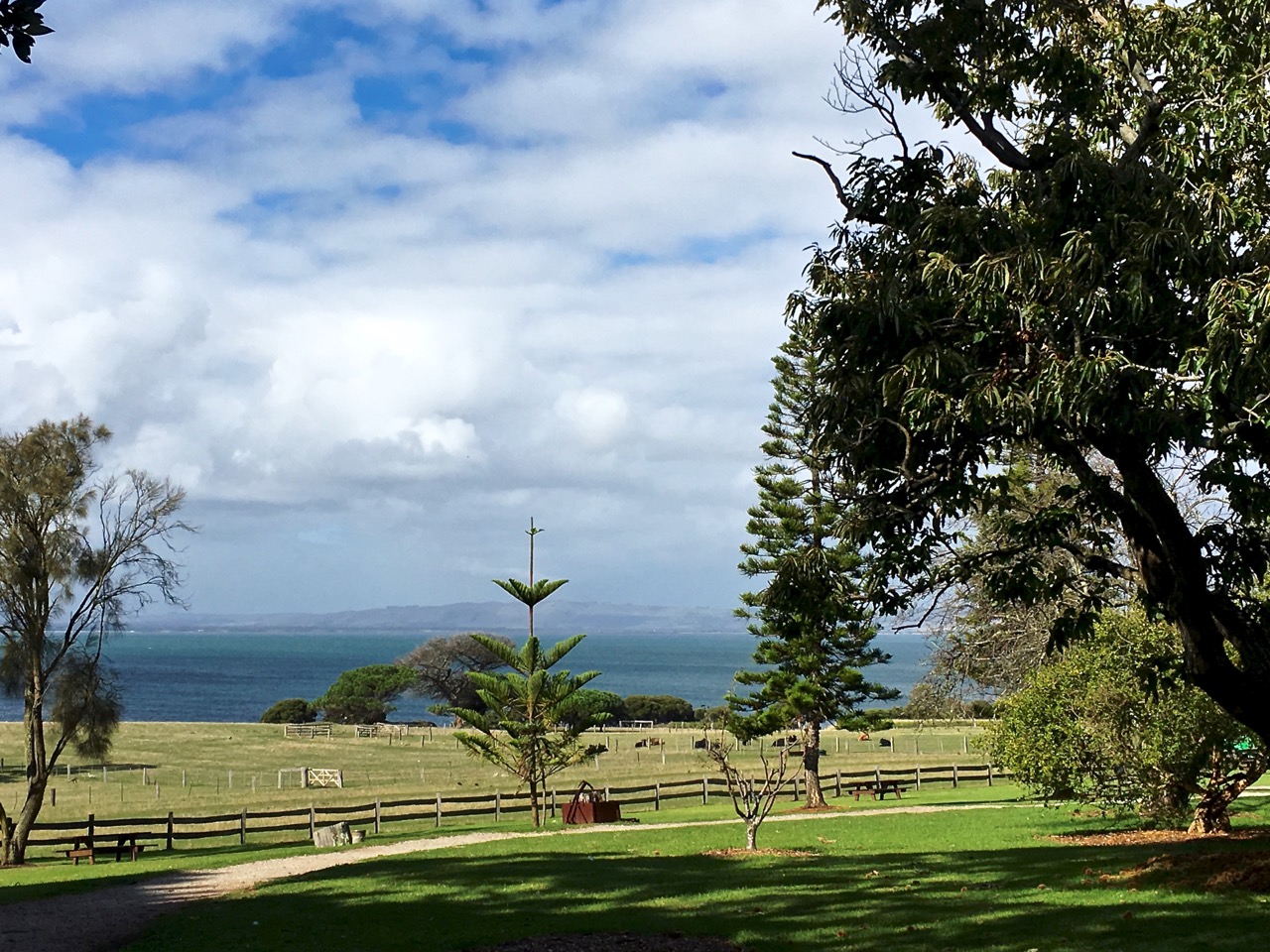
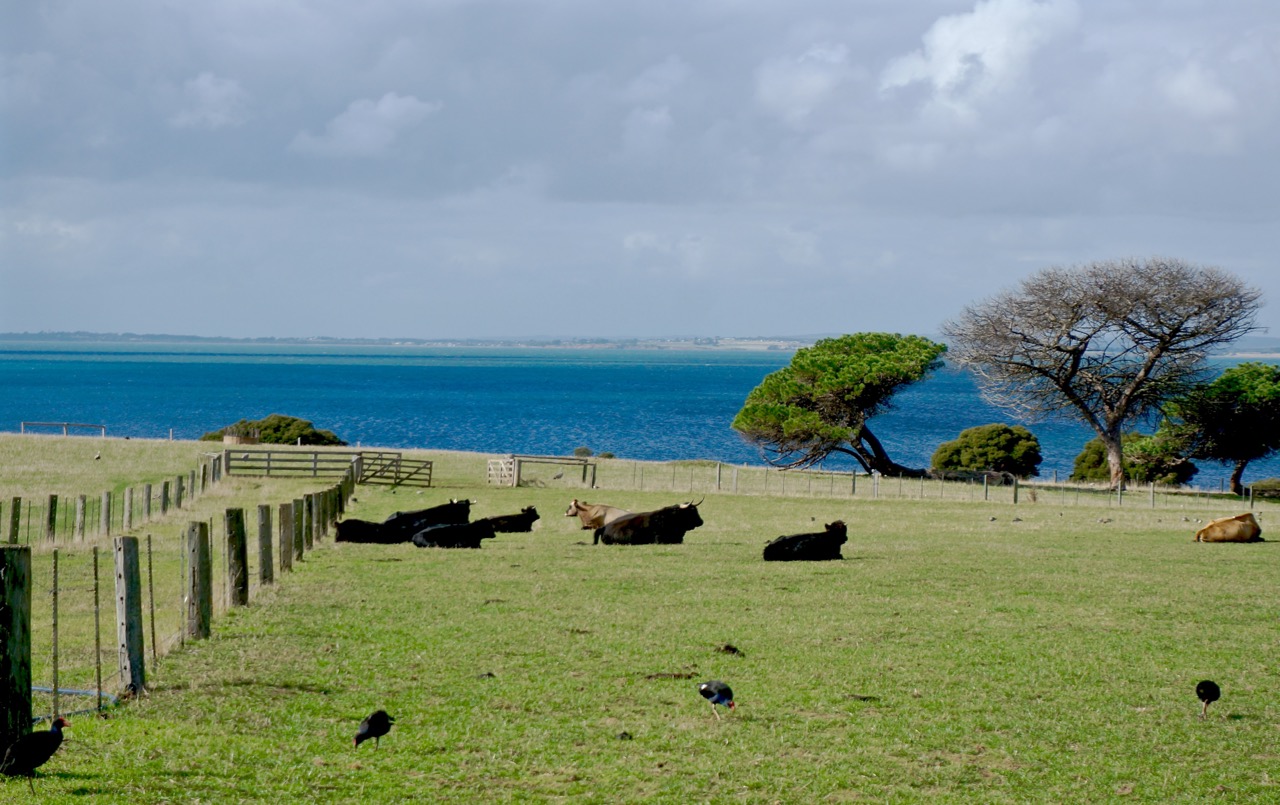
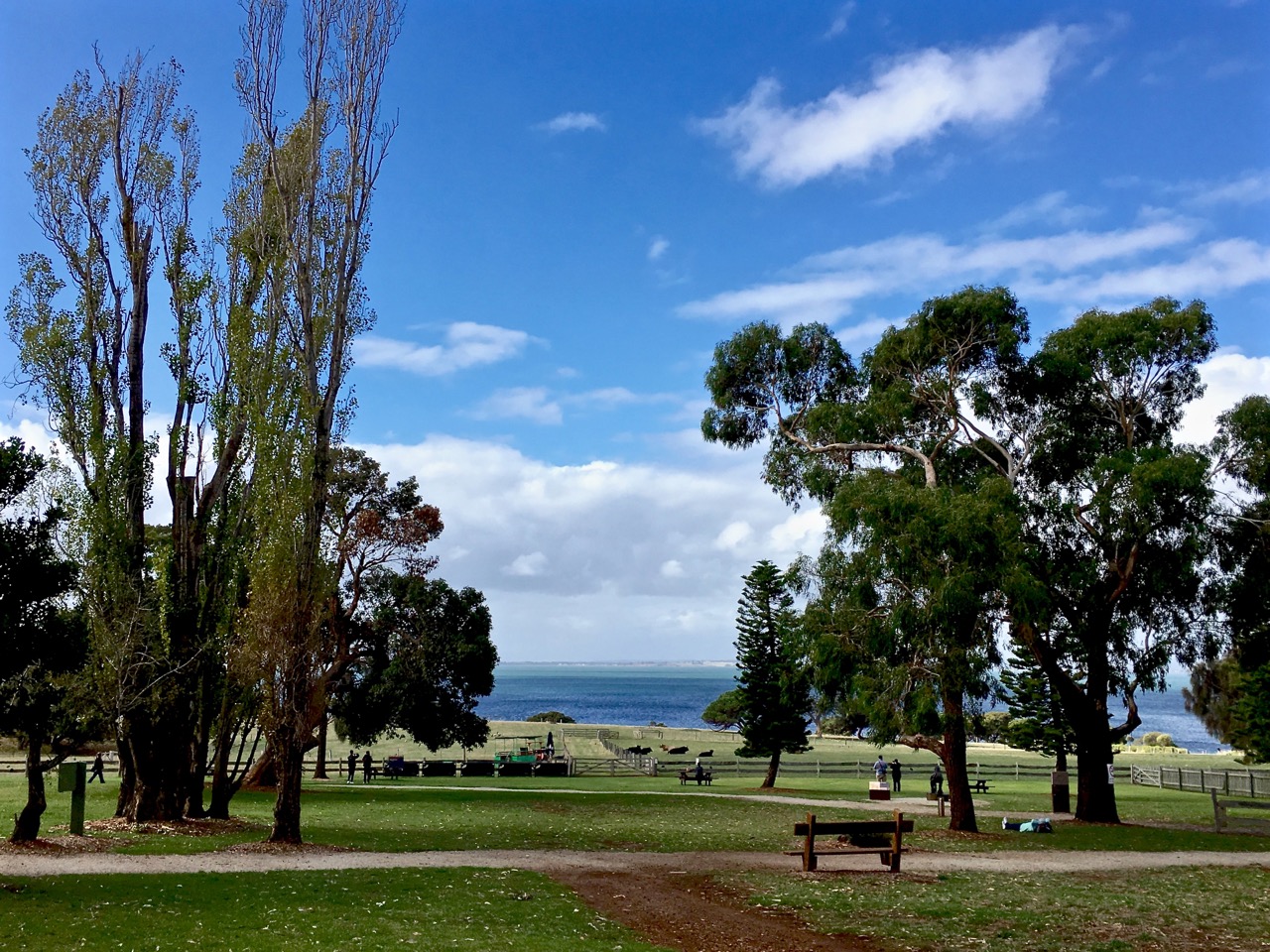
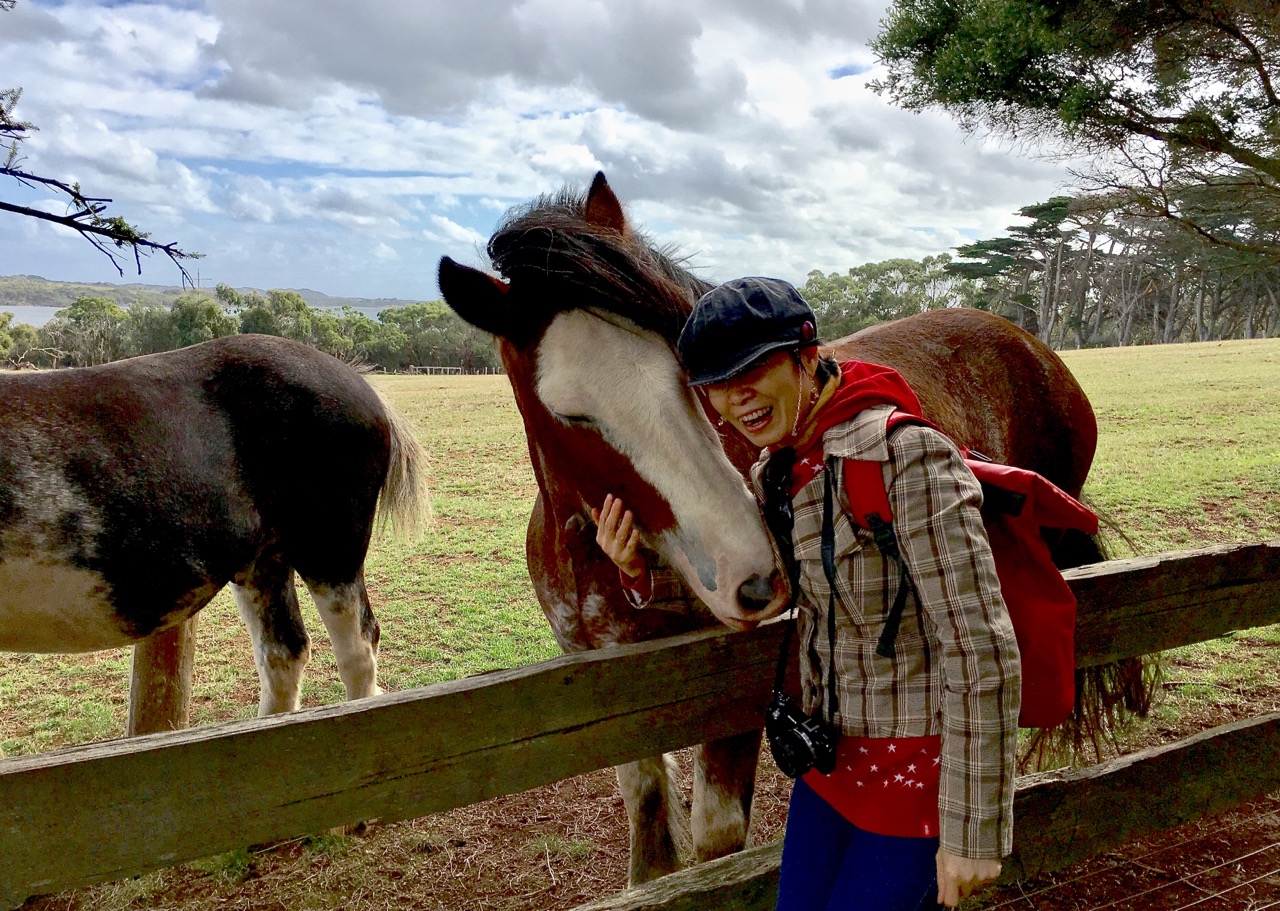
Back at the meeting point by the gate, people weren’t all back yet, and I found two more horses. The guide said they’re her buddies and even told me their names—which I promptly forgot; I’m hopeless with names.
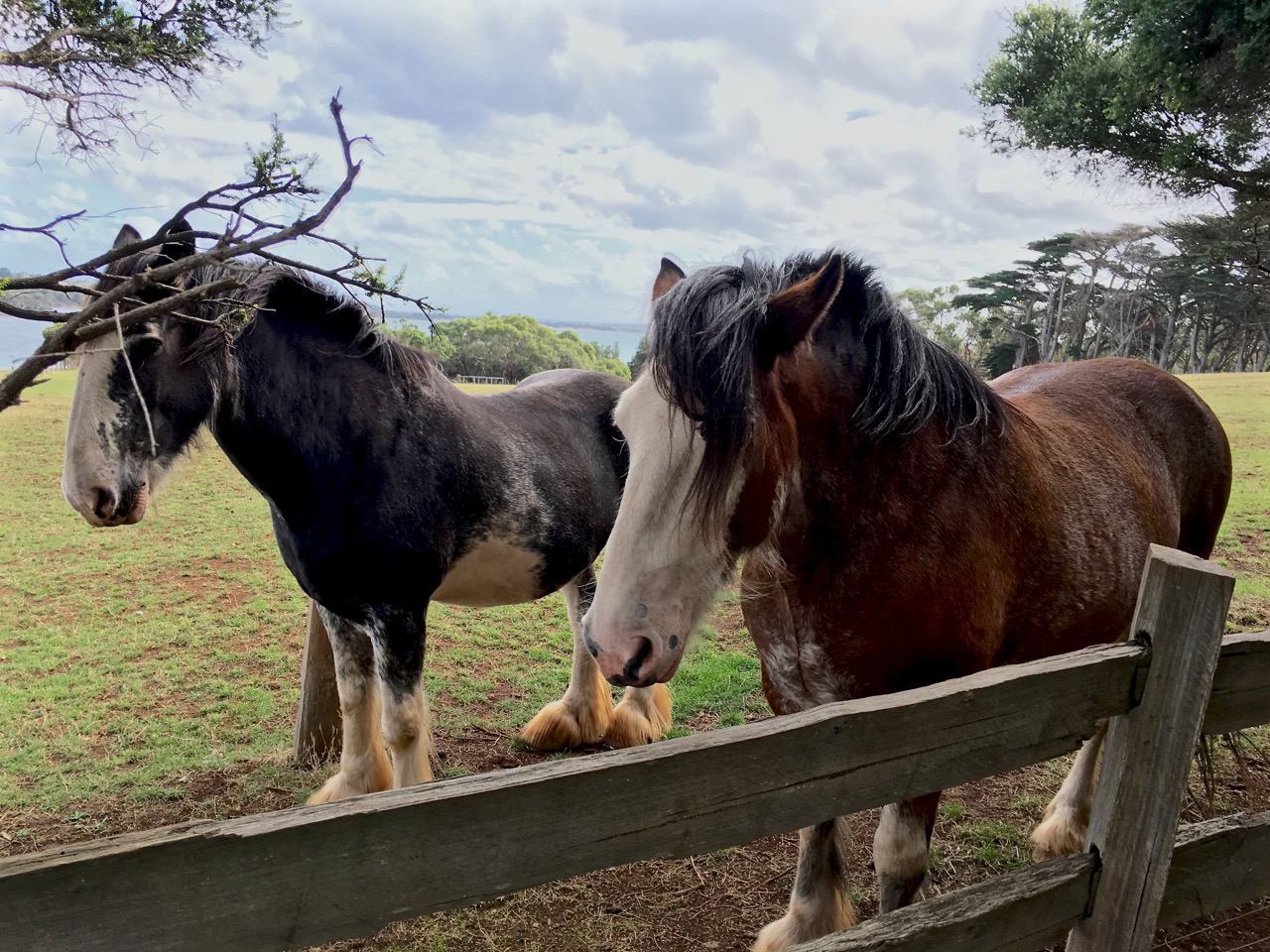
Seeing how gentle they were with the guide, my bruised heart softened. I carefully petted the gentler-looking one. Maybe because its friend was there, it was on its best behavior—and my “wounded” heart healed instantly.
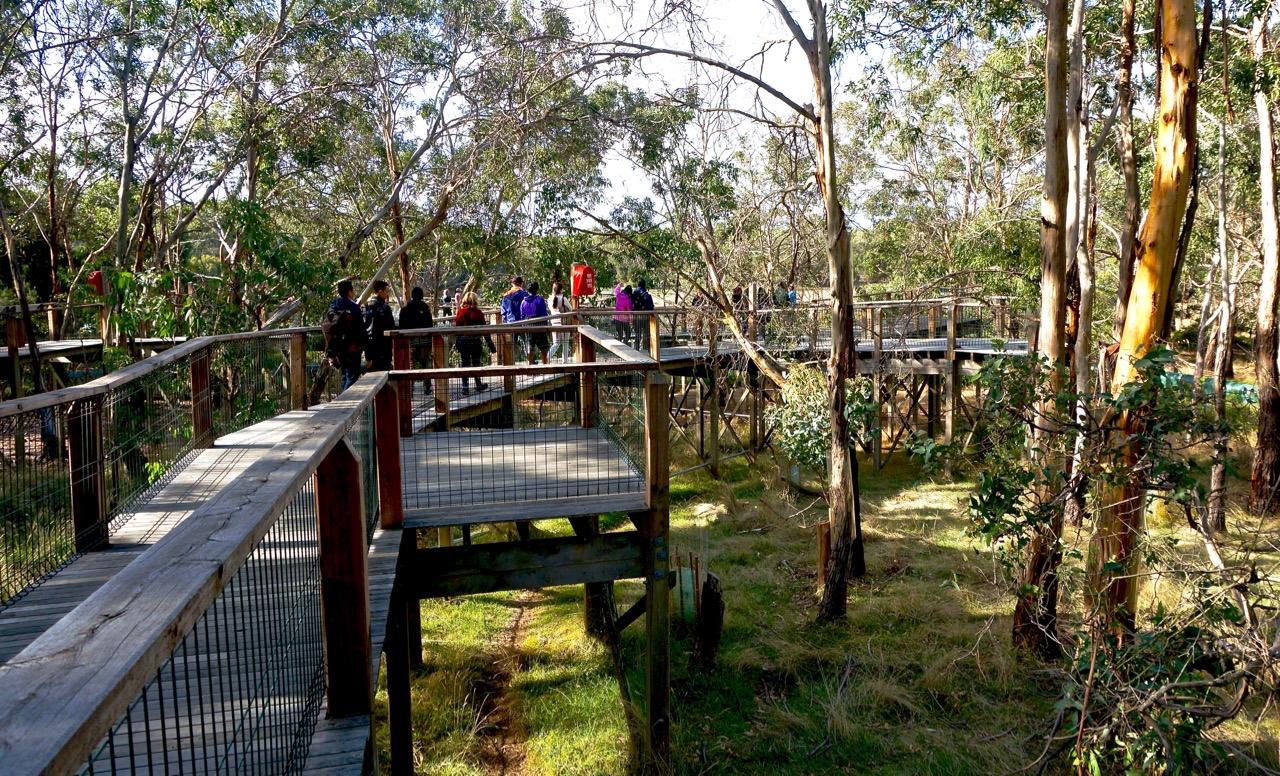
Next stop: the Koala Conservation Centre—now we’re on Phillip Island proper. These koalas aren’t for posed photos; they hide in outdoor trees, and you need sharp eyes to spot them. Elevated boardwalks protect the undergrowth and make it easier to observe koalas up in the branches.
Most were snoozing high up…
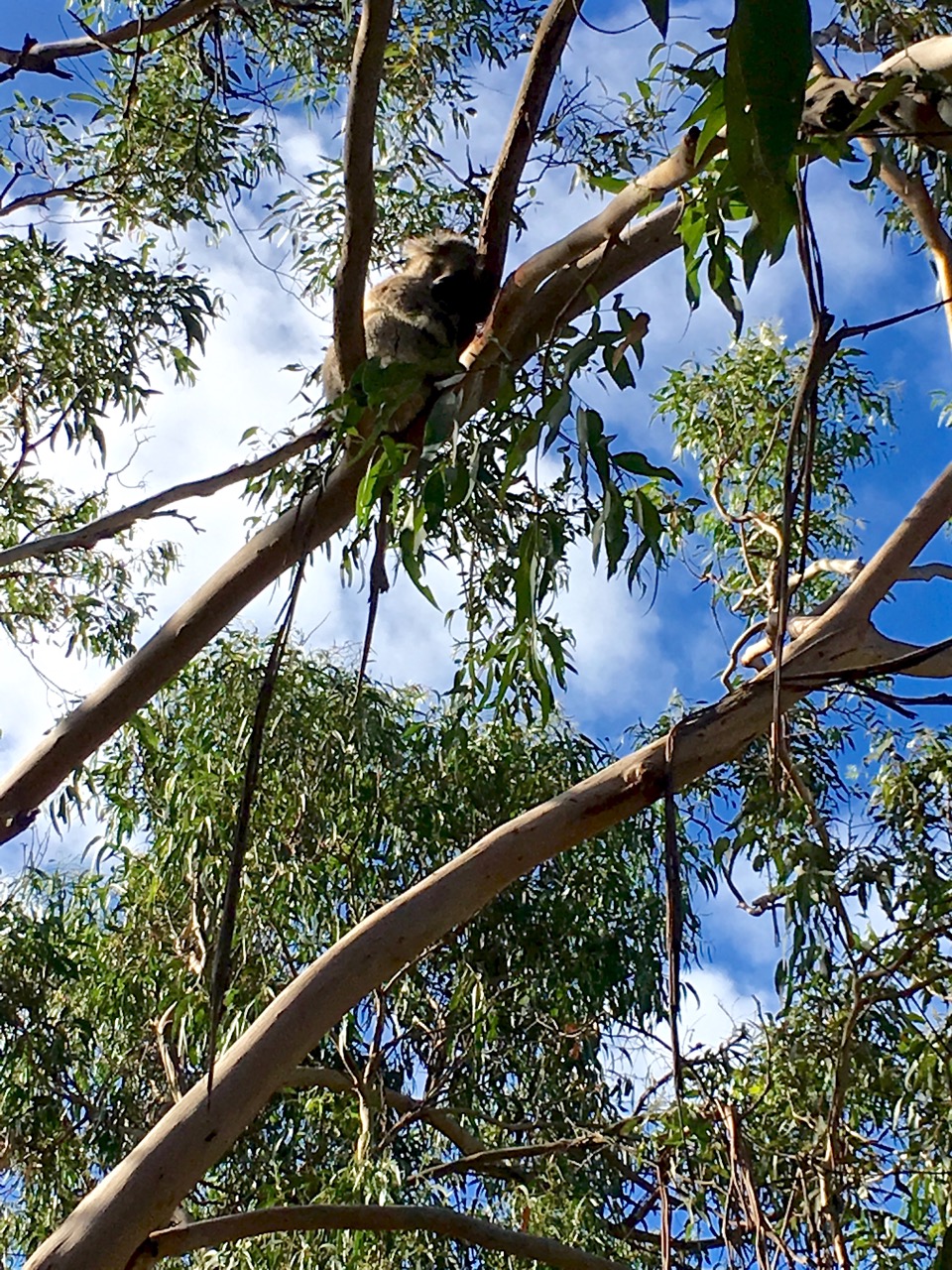
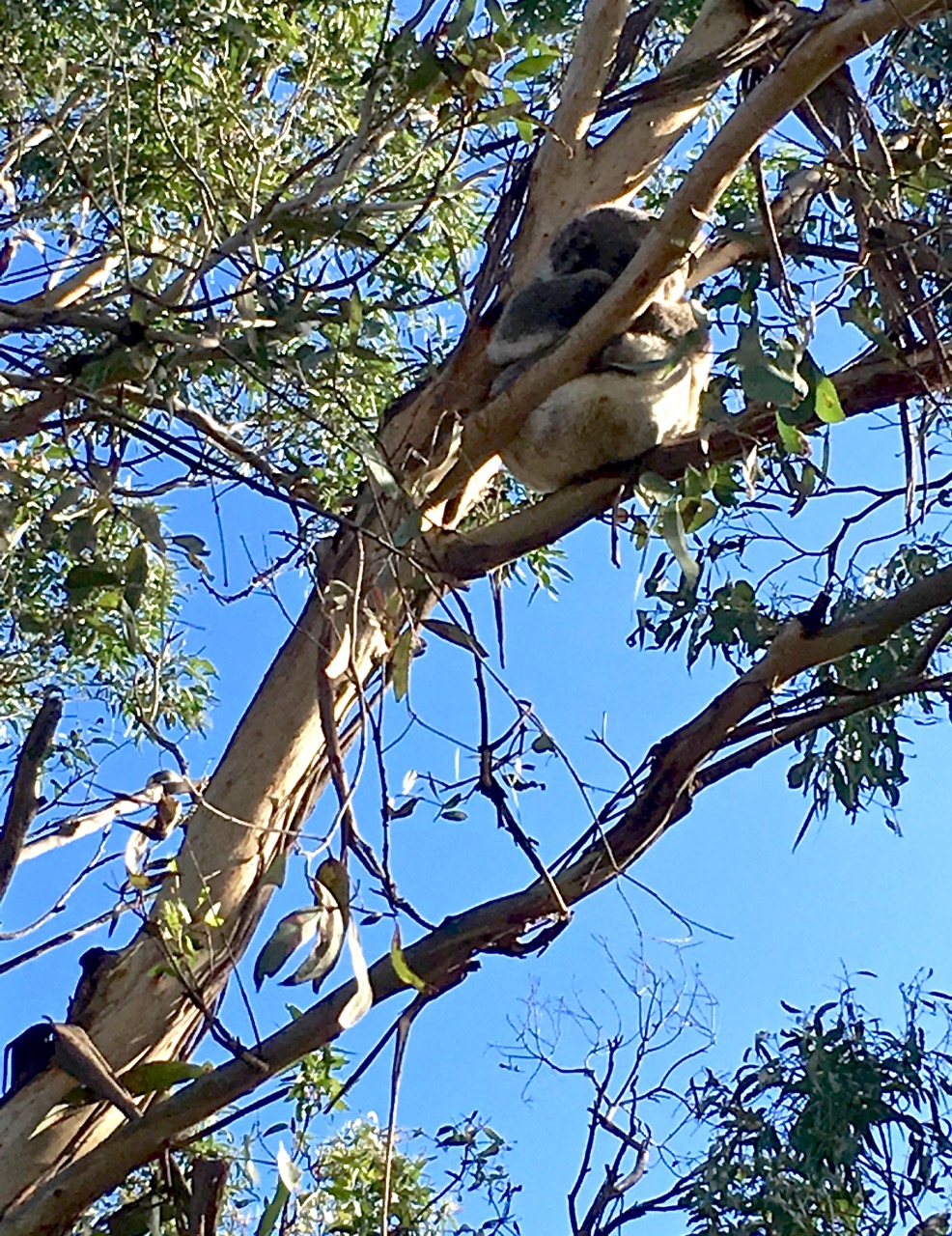
This considerate one chose a lower branch—everyone’s memory cards took a hit
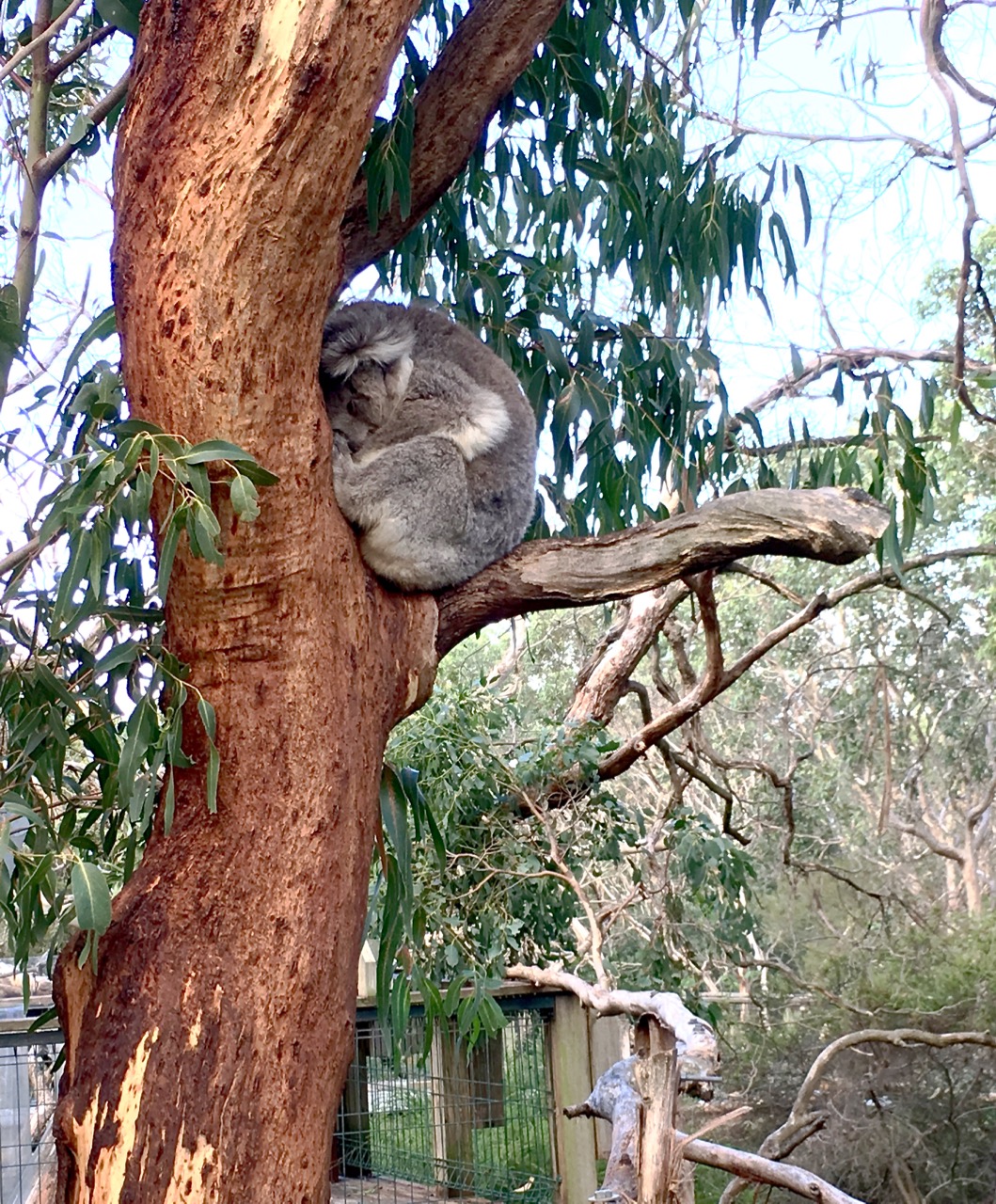
Then we headed to The Nobbies, the island’s far southwestern tip.
Boardwalks stretch 2–3 km along the rocky coast—great for a stroll, though the tour didn’t allow much time.
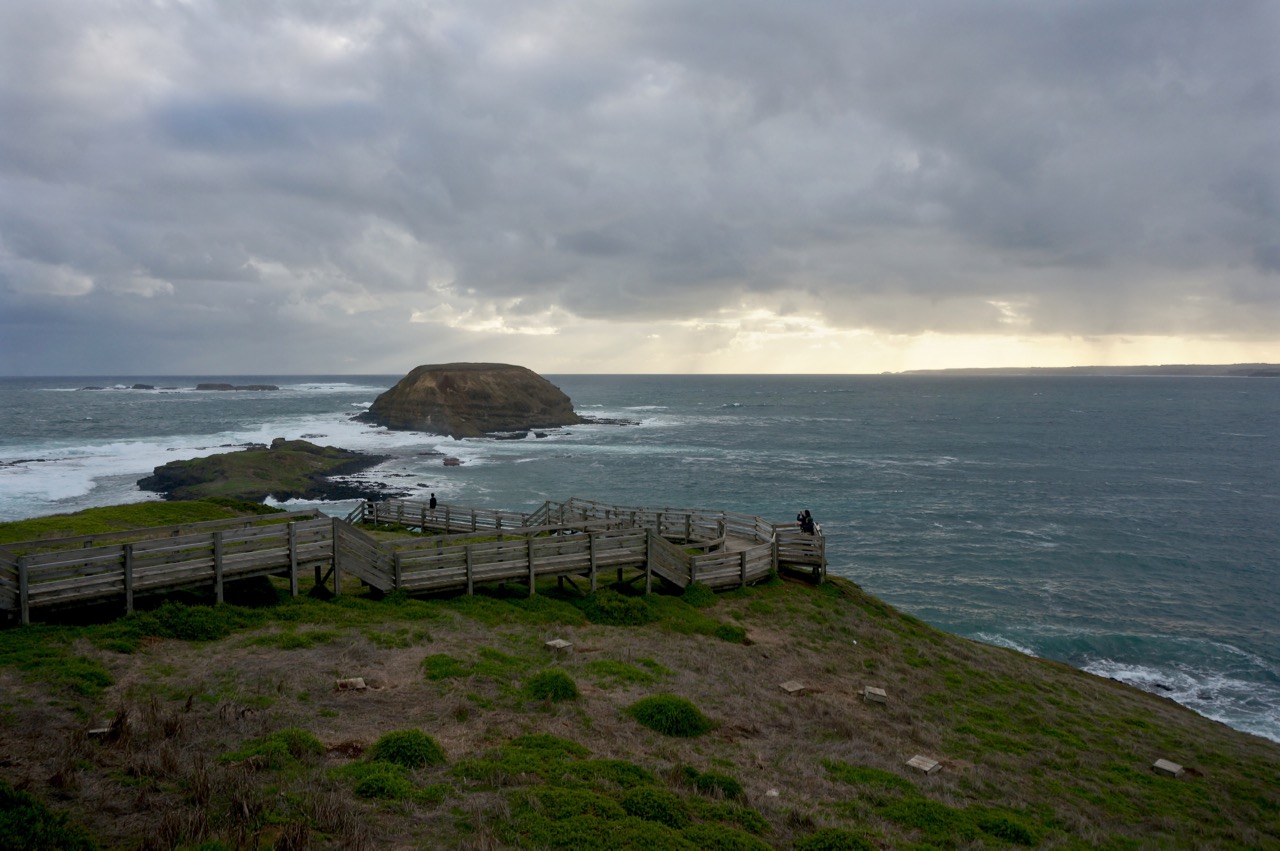
They say Australia’s largest fur seal colony lives here—Seal Rocks—but maybe it was the wrong season; I didn’t spot any.
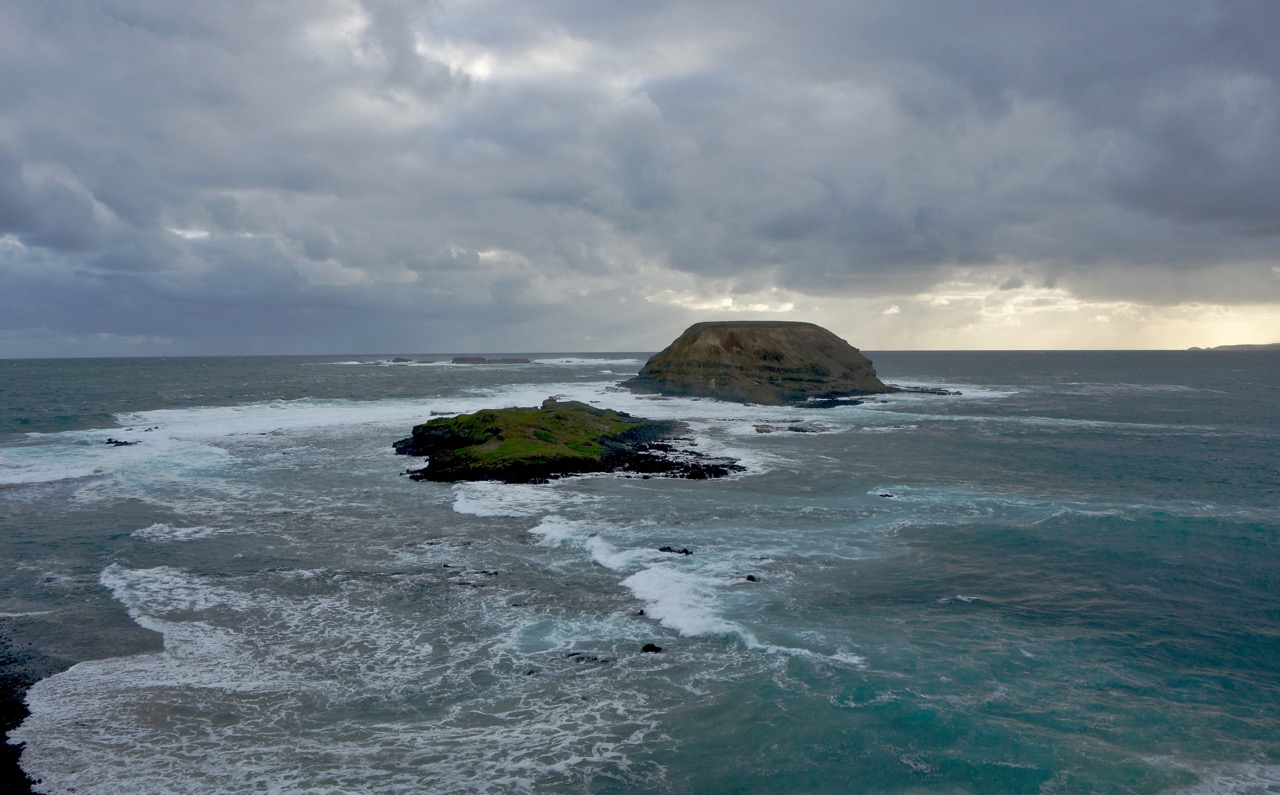
Waves on Australia’s coast are powerful—there’s a famous surf spot nearby.
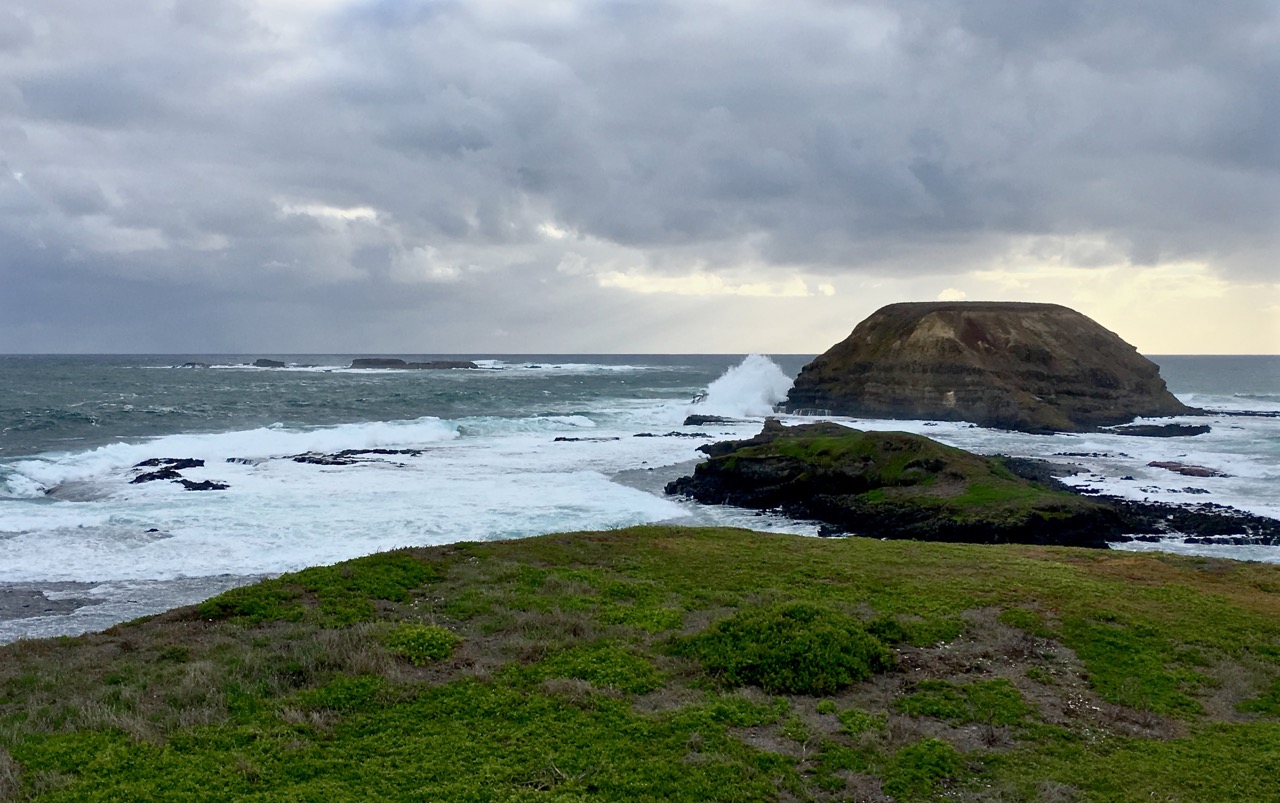
The guide said 20–30 thousand little penguins nest along these beaches. To protect them, roads close an hour before sunset—no cars, no lights. At night the hillsides are dotted with penguins. Getting here took a lot of effort: a few households used to live along the beach. The government asked them to relocate anywhere in Victoria, all costs covered, but they refused. After seven years in court, the ruling finally required them to move, returning the coastline entirely to wildlife.
I got misty-eyed hearing that…
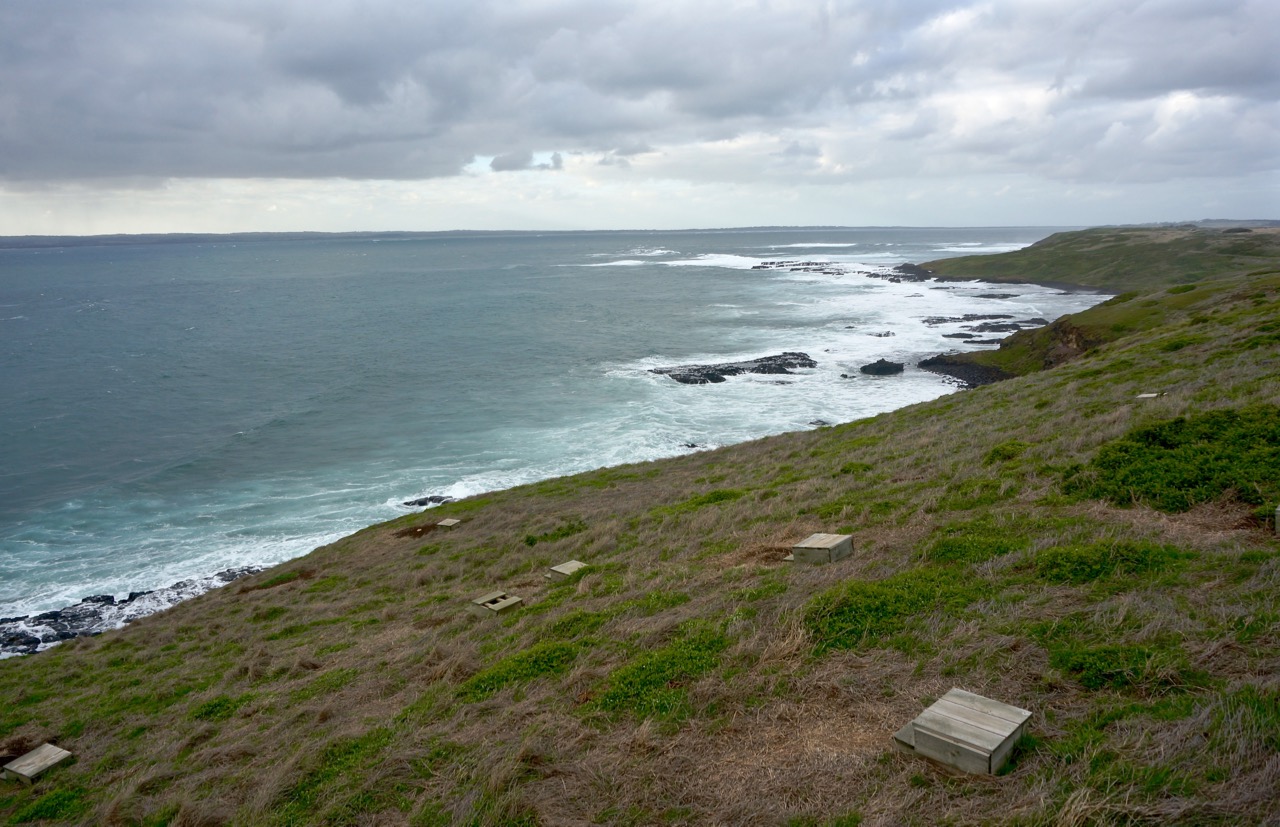
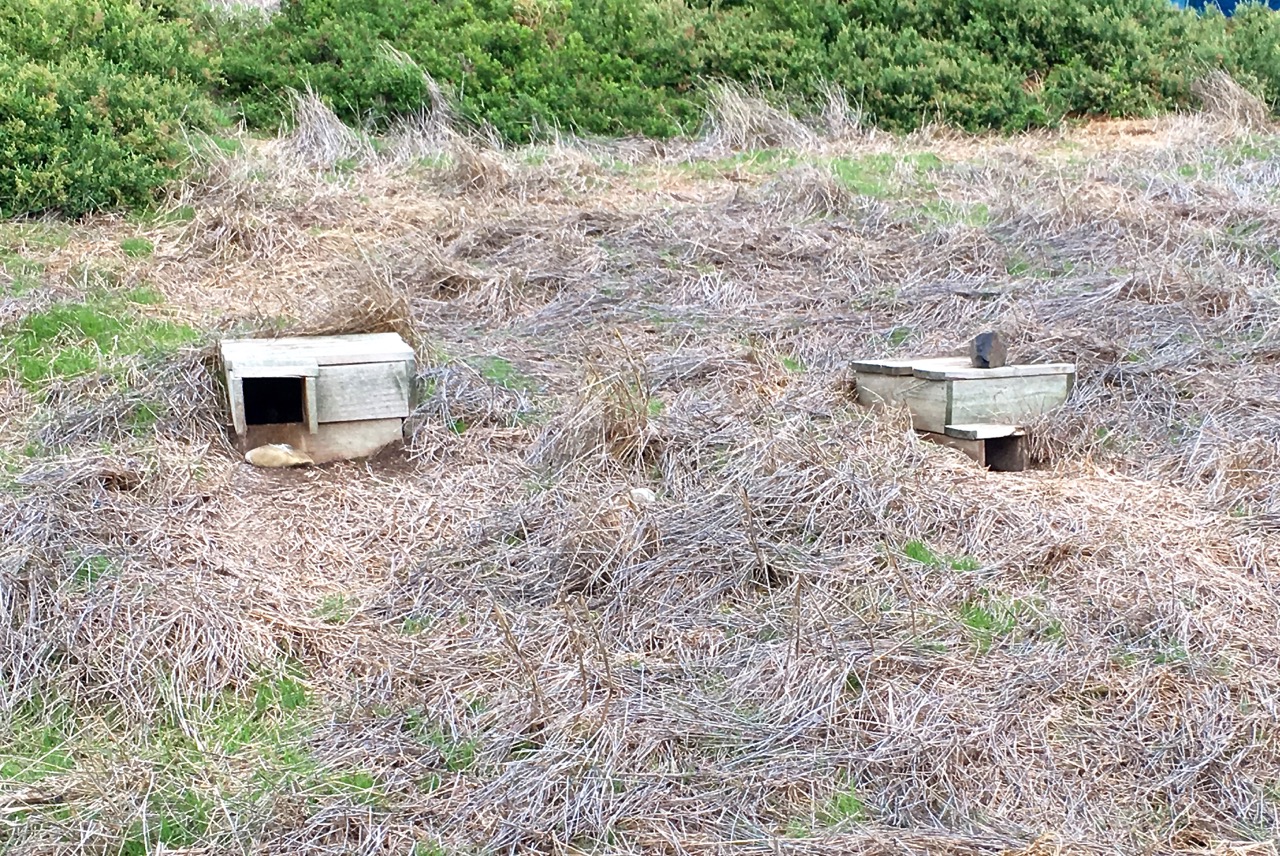
On the slopes by the sea you’ll see lots of little wooden boxes—penguin “villas.” Each box houses a penguin family.
Adults head out to sea by day while the chicks wait at home. With sharp eyes you can sometimes spot chicks inside—someone on our tour did. My eyes… not so much.
Finally we reached the main event: Phillip Island Nature Parks—the big sign even says “Penguin Parade” in Chinese.
The tour notes made it clear: no photography during the parade. The guide repeated this several times, including just before we got off the bus. Flash can harm penguins’ eyes and affect their ability to hunt. You might think, “What if I don’t use flash?”
Rules are rules—so we follow them. That’s why the penguin photos here are from the web.
The visitor center was packed. I wolfed down dinner and hurried to the stands. Compared with 20 years ago, there’s now a boardwalk with branches to different viewing areas. By the time I found mine, seats were gone, so I stood and peered through gaps. All around the stands, the dense coastal grasses were dotted with those little penguin houses.
After 7:30, a big wave receded and a patch of bright white appeared on the shore—it was penguin bellies! The first little penguins had landed, and the crowd gasped.
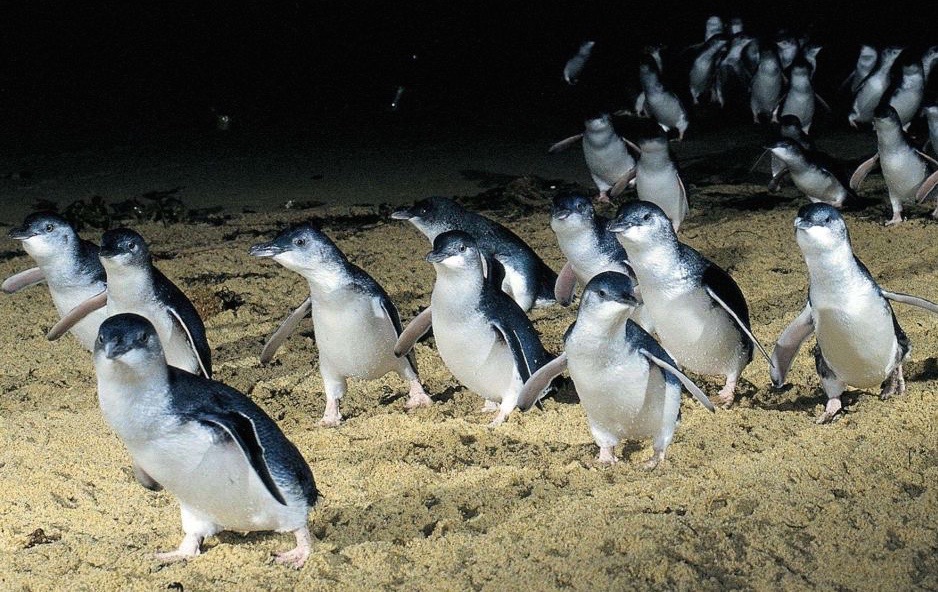
The first group had about 20. They scrambled onto the rocks, waddled to the grass, then paused—scouting for danger, perhaps?
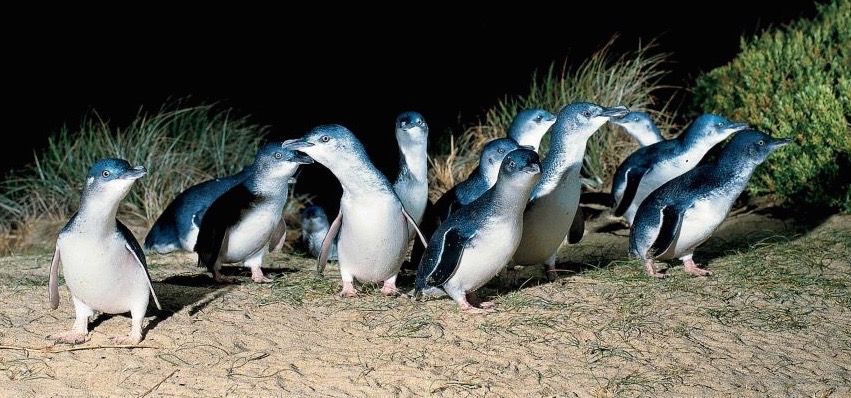
After a short wait they moved again. Some followed little paths—probably penguin-made—up the slope. Others headed straight toward our stand and then along the boardwalk beside it to the back.
As they waddled past, they completely ignored us—those plump little rumps sashaying by were unbearably cute.
Several more groups came ashore after that, 20–30 at a time, each pausing at the grass before splitting off toward their own burrows.
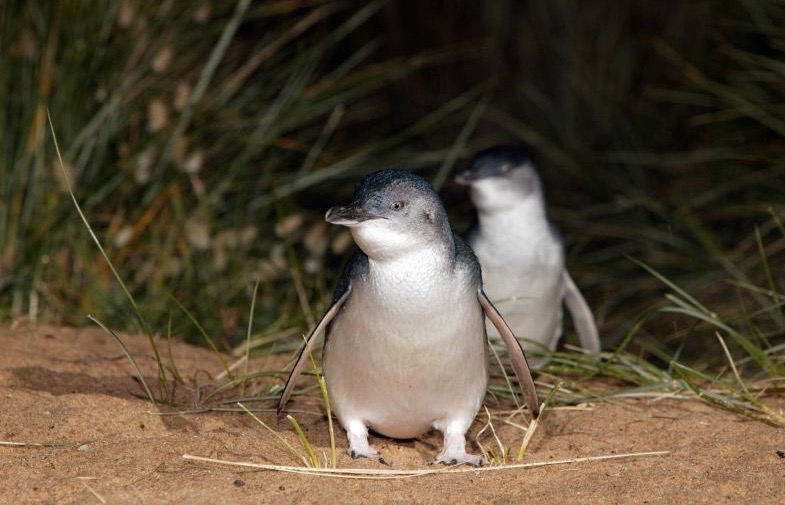
After five landing waves it was almost time to leave, so I reluctantly headed back along the boardwalk—and discovered penguins on both sides! They’d walk a bit, stop to look and sniff around, moving so slowly.
Crouching on the boardwalk, I was barely a meter from the nearest penguin. Up close, that chubby sway was lethal-level cute.
People whispered “hello” and waved as they passed, but the penguins paid us no mind—humans were basically invisible to them.
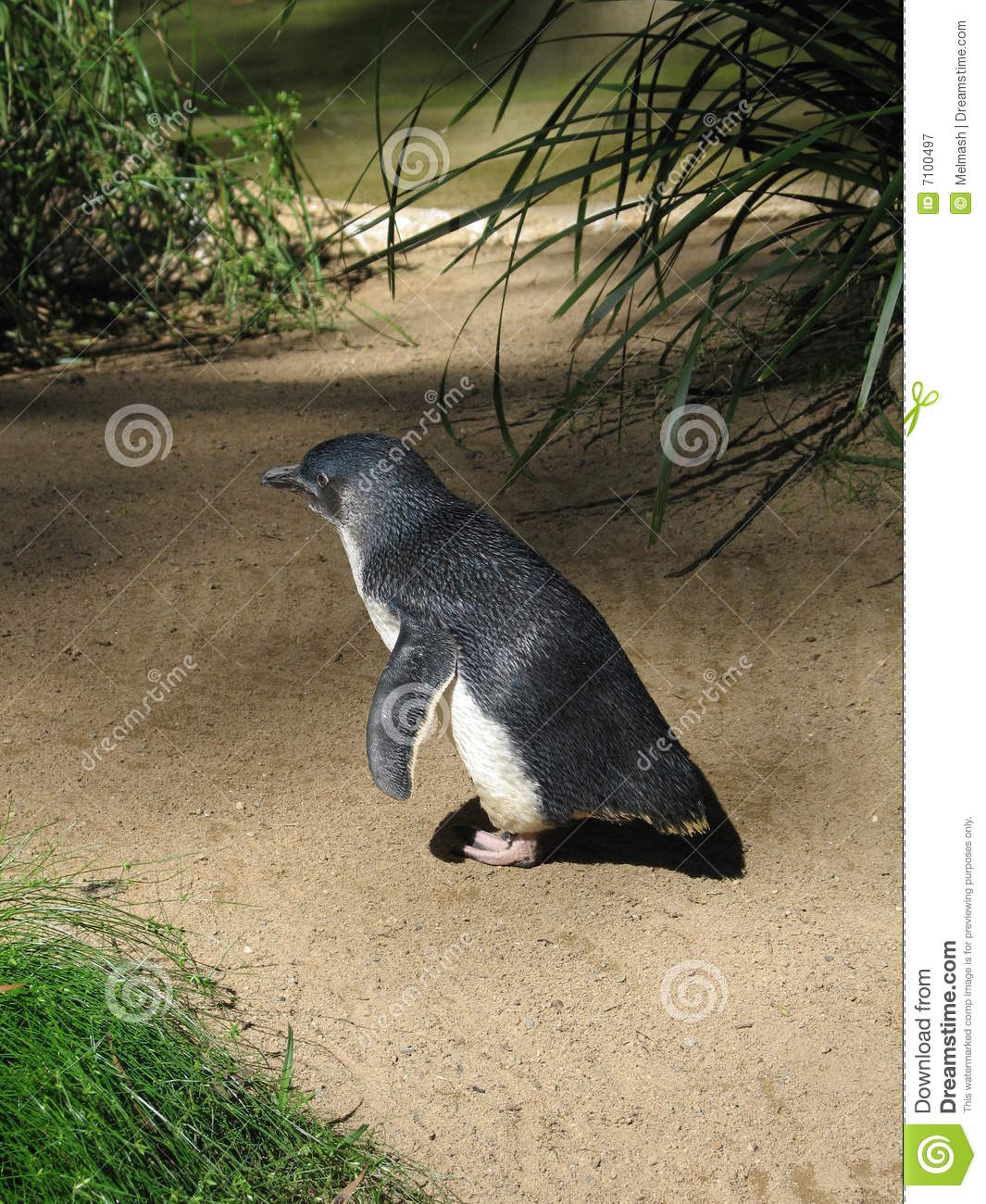
At the visitor center entrance I was gobsmacked.
Despite the crowds and noise, five or six penguins stood on a small patch by the boardwalk, calmly preening and completely unfazed by the traffic of people.
It must have taken years of effort to earn this level of trust. I’m full of respect for how Australia treats its wildlife—and how, on that foundation of respect, they’ve built a thriving tourism economy. Wildlife and people coexisting, each in their space. And kudos to visitors who follow the no-photo rule, too.
Can’t wait to visit the Penguin Parade again someday!
Tips:
1) Transport: Public transit to Phillip Island is inconvenient. Self-driving is best—combine it with a Great Ocean Road trip if you like. Otherwise, join a day tour like I did; options abound, from half-day to full-day, at various price points (lots listed on Taobao).
2) Weather: It gets cold and windy at the parade—bring warm, wind- and rain-proof layers, plus rain gear.
3) Dinner: Lines at the visitor center café are long and slow. Bring snacks so you can grab a good spot early.
4) Seating:
In the map below, the right side is the general stand; the left has the VIP and underground “bunker” stands. The building at the top-left is the visitor center.
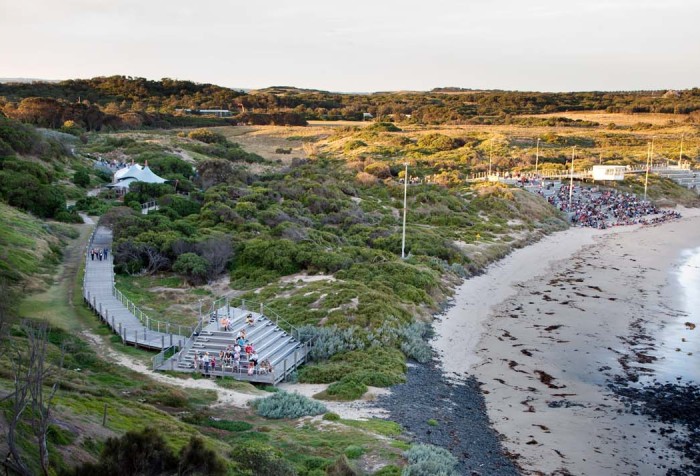
Below: the first two rows of the VIP stand (best views; rows behind are less ideal). The lower image is the bunker stand.
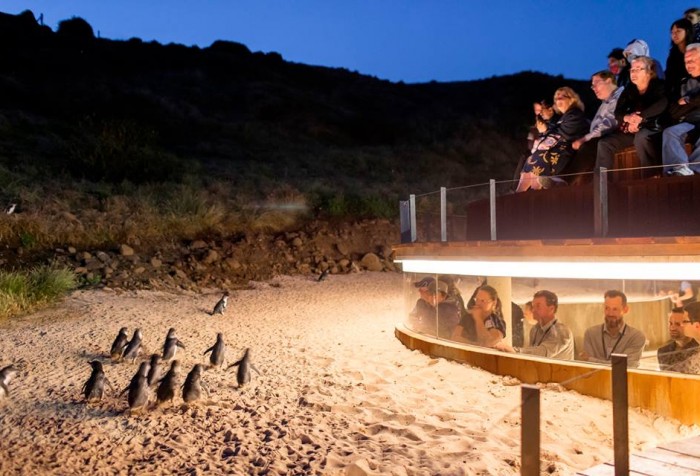
You can see the penguins from very close range along the boardwalks.

-
 Back from a DIY Trip: Sydney & Gold Coast
Nov 29,2025
-
 Travelogue I — Sydney Part (VI)
Nov 18,2025
-
 Leftovers, Fresh Takes — Sydney, April 2011
Nov 17,2025
-
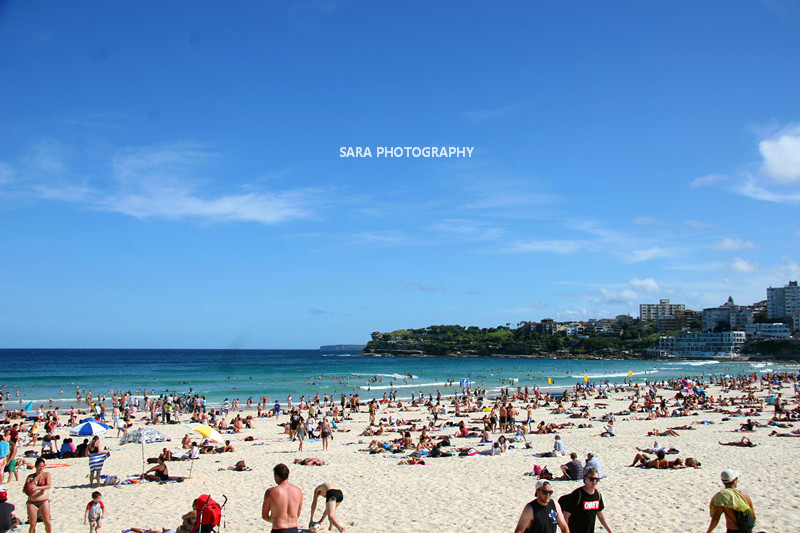 Overcast Sydney
Nov 16,2025
-
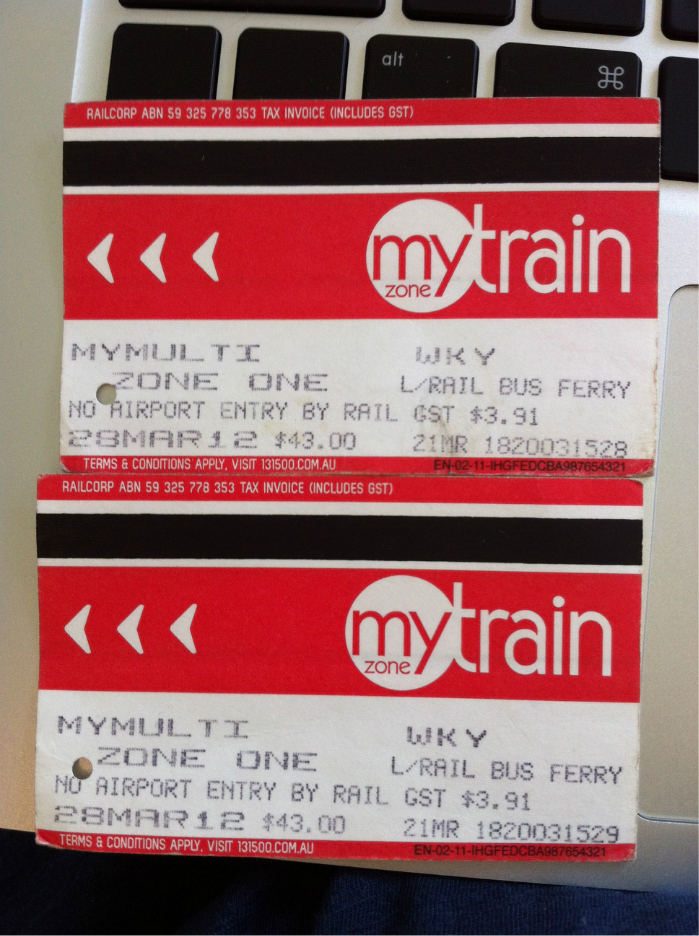 Tail-end Sydney Trip — Ticket Guide
Nov 15,2025
LIMITED TIME OFFERS
Related Apartments
Premium accommodations at exceptional prices.
Elevate your travel experience with our carefully curated holiday deals.
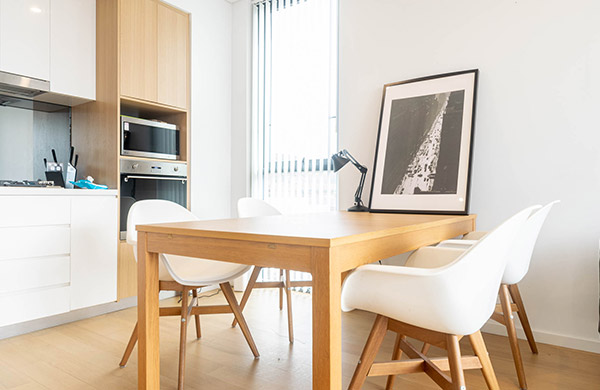

Waterloo 2 Bedroom Elizabeth Street WAT1002
 Elizabeth Street, Waterloo NSW, Australia
Elizabeth Street, Waterloo NSW, Australia $180 - $300
-
 2 Bedrooms
 -
 2 Baths
 -
 2 Guests
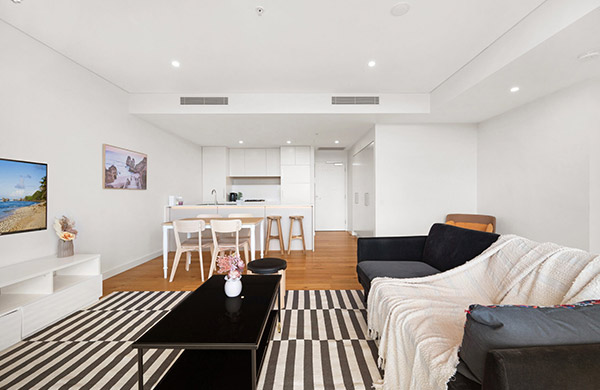
Ryde 2 Bedroom Parkes Street RY273
Parkes Street, Ryde NSW, Australia
Parkes Street, Ryde NSW, Australia $180 - $350
- 2 Bedrooms
- 2 Baths
- 2 Guests
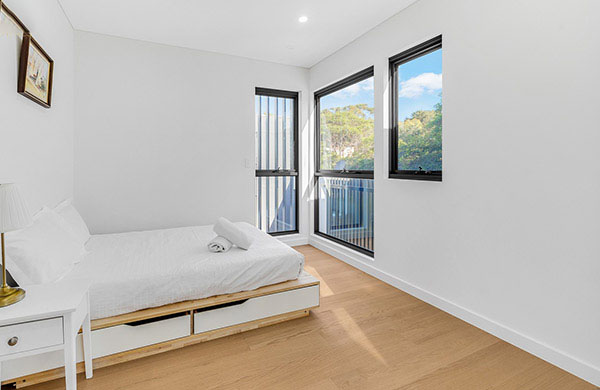
Lane Cove 4 Bedroom Townhouse Longueville Road LC48
Longueville Road, Lane Cove NSW, Australia
Longueville Road, Lane Cove NSW, Australia $250 - $500
- 4 Bedrooms
- 3 Baths
- 4 Guests
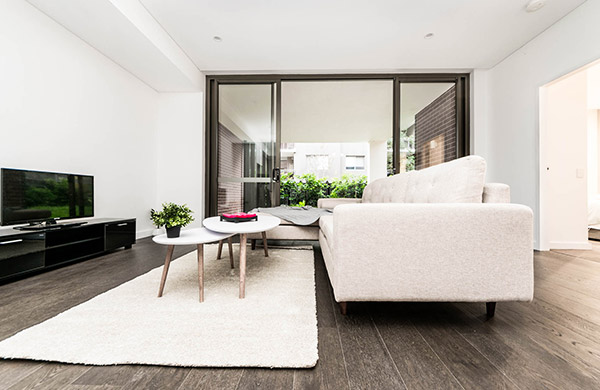
Gordon 2 Bedroom Ryde Road GOR004
Ryde Rd, Gordon NSW, Australia
Ryde Rd, Gordon NSW, Australia $140 - $190
- 2 Bedrooms
- 1 Baths
- 2 Guests
